Problem guide
Peeling exterior paint in Atlanta: what to do first
Peeling paint is a symptom. Repainting over it without finding the cause usually buys a year, sometimes less. The order you deal with it in matters.
Questions about your own house? We answer 24/7.
By Carla Bingham, Painting and Restoration Guides Editor · Updated September 2026
Quick answer
Peeling exterior paint in Atlanta usually traces back to moisture: water getting behind the paint through failed caulk, gutters or soft wood, or paint applied over pollen, dirt or damp siding. Find and fix the water source first, probe for rot, and in homes built before 1978 avoid dry scraping until lead is ruled out. Only then scrape, prime and repaint.
Look at how it's peeling
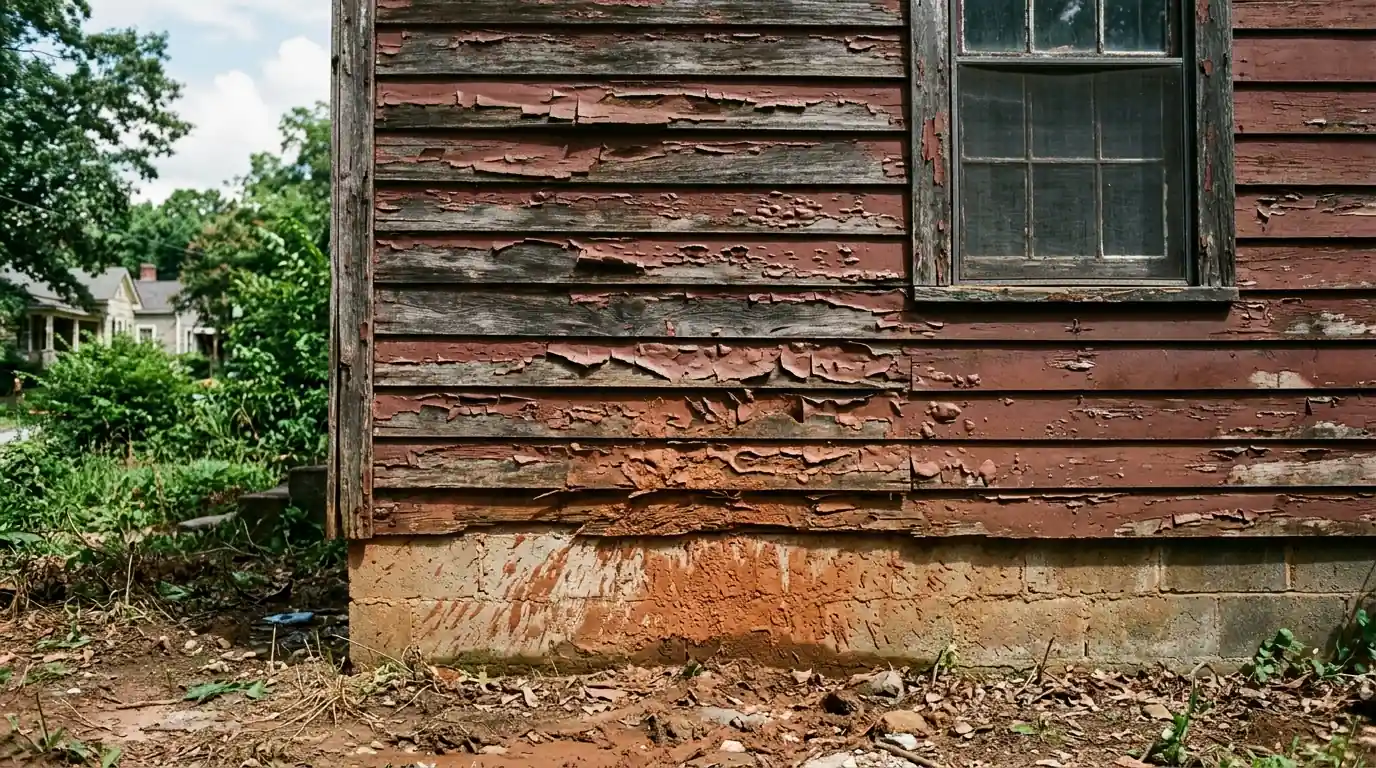
Paint peeling in one area, especially near windows, gutters or the ground, points to water getting in at that spot. Paint peeling in sheets down to bare wood means the bond failed, often because it went on over dirt, pollen or damp siding. Fine cracking in a scaly pattern across a whole wall means the old layers have failed together.
Chalky powder, fading and mildew are different: they're signs of aging and humidity rather than water behind the paint, and they usually wash off before a repaint.
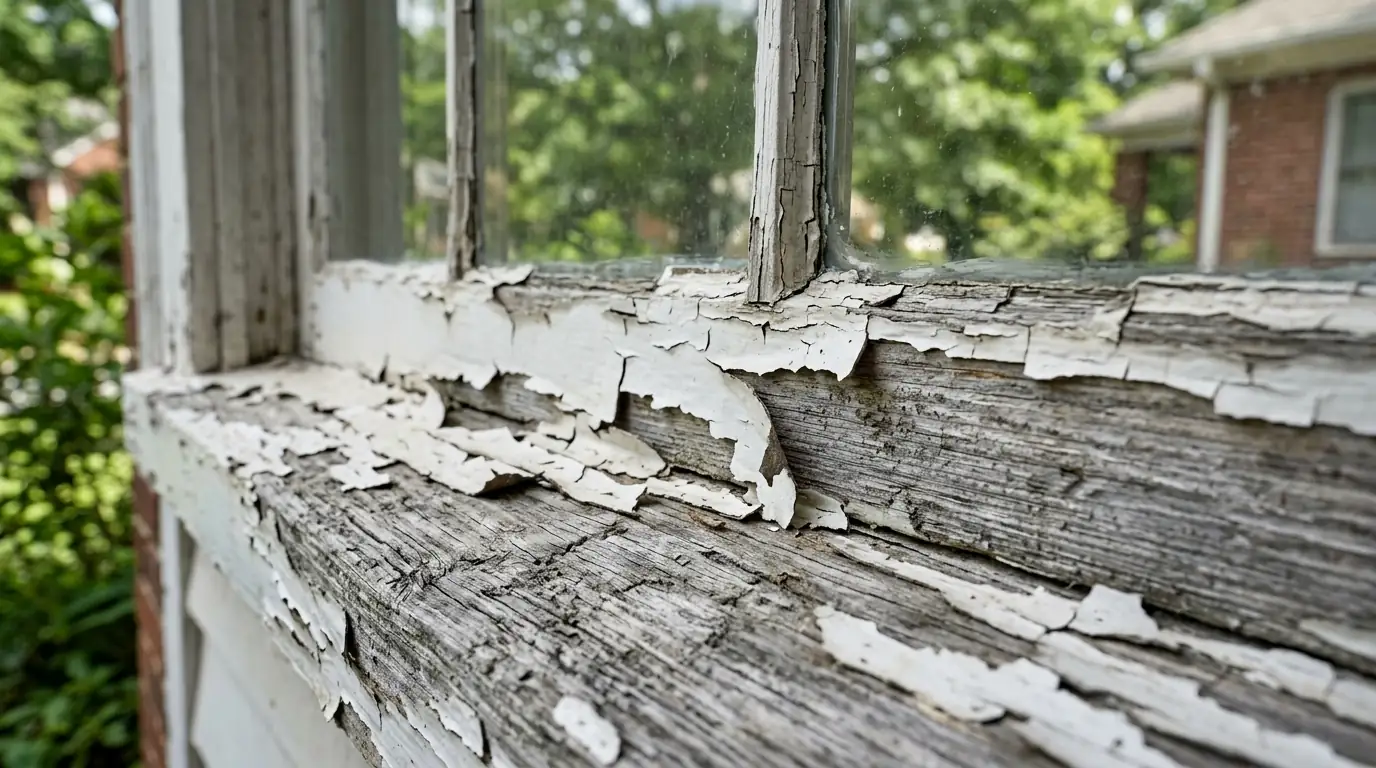
Common kinds of paint failure at a glance
Matching what you see to its usual cause saves time before anyone climbs a ladder.
| What you see | Usual cause | First step |
|---|---|---|
| Peeling in one area | Water getting in nearby | Find and seal the entry point |
| Sheets down to bare wood | Poor bond: dirt, pollen or damp siding | Wash, dry, prime bare wood |
| Scaly cracking across a wall | Old layers failed together | Scrape to sound paint, lead-safe if pre-1978 |
| Blisters | Moisture pushing from behind | Check caulk, gutters and interior venting |
| Chalky powder | Paint aging in the sun | Wash before repainting |
| Green or black spots | Mildew in humidity | Clean with a mildewcide |
In an older house, don't dry scrape yet
If the house was built before 1978, the old paint may contain lead. Dry scraping and sanding turn it into dust that settles in soil and gets tracked indoors. Leave loose paint alone until it's tested or handled with lead-safe methods: plastic on the ground, wet scraping, no power sanding and careful cleanup.
This matters most on older intown houses, where there may be many layers of paint under the current finish.
Find where the water is coming from
Georgia's summer storms drive rain behind old caulk at windows and trim, and humidity swings make wood swell and shrink until the paint film cracks. Once water is behind the paint, it pushes the finish off from inside and keeps doing so until the entry point is closed.
Check the caulk at window and door frames, look for gutters that overflow or drip behind the fascia, and look at bathrooms, laundry rooms and kitchens on the other side of the wall. Venting and leaks inside can push moisture out through the siding too.
Probe for rot before you paint
Push a screwdriver or awl into the wood around the peeling area, especially sills, the bottom edges of trim and corner boards. If it sinks in, the wood is rotting, and paint won't hold on it. Atlanta painters regularly see fresh paint peel within a year where soft wood was simply painted over.
Small rotted spots can be dug out and rebuilt with epoxy; larger ones need new wood.
Spot repair or full repaint?
If the peeling is limited to one area and the cause is found, a spot repair can work: fix the water source, repair the wood, scrape, prime and repaint that section, then paint to a natural break like a corner so the patch doesn't stand out.
If peeling shows up on several walls, the paint is chalking everywhere, or the house is past 7 to 10 years since its last repaint, a full repaint with proper prep usually costs less over time than chasing patches.
When to schedule the repair
Plan exterior work after the spring pollen season and in stretches when humidity drops below about 70 percent, starting after the morning dew has dried. Fix the water source first, even if the painting has to wait for better weather, so the damage stops spreading.
Questions
Peeling paint questions
Usually moisture behind the paint or poor prep: paint over dirt, pollen, damp siding or soft wood.
Only after the water source is fixed and any rot repaired. Otherwise the peeling returns.
In homes built before 1978 it may contain lead, so avoid dry scraping and sanding.
No. High pressure forces water into the wood and spreads old paint chips.
Not usually. Most causes are caulk, gutters or local rot.
Fix the water source right away; paint after pollen season in a dry weather window.
Related
Services this guide covers
- Exterior House Painting
- Wood Rot Repair
- Caulking and Weatherproofing
- Victorian and Craftsman exterior repaint
More guides
Keep reading
Signs of Wood Rot to Fix Before You Paint
How to find soft wood before new paint hides it.
our wood rot guidePainting a Pre-1978 Atlanta Home Safely
Lead-safe prep, plaster and old trim in older Atlanta houses.
lead-safe painting prepPaint or Limewash for a Brick House in Atlanta
Limewash, mineral paint and masonry paint compared for Atlanta brick.
choosing a finish for brickStop the peeling at the source
Call and we'll find where the water is getting in before quoting any paint.
Call (470) 887-8741Answered 24/7 from 565 Tift St SW Ste b, Atlanta.
Where we start from