Seasonal guide
When to paint a house exterior in Georgia
Exterior paint in Georgia can go on most of the year, but not every day is a good painting day. Humidity, pollen and storms decide the calendar more than temperature does.
Questions about your own house? We answer 24/7.
By Carla Bingham, Painting and Restoration Guides Editor · Updated September 2026
Quick answer
The best time to paint a house exterior in Georgia is late spring after pine pollen season ends in early April, and early fall. Paint cures best when humidity sits between about 40 and 70 percent, so coats go on in the drier middle of the day, roughly 10 a.m. to 4 p.m., after morning dew has burned off. Summer works with careful timing.
The short answer: late spring and fall
Late April through early June and September through early November give Atlanta the most good painting days. Humidity is lower than midsummer, pollen is gone, and afternoon storms are less frequent. Those windows fill up first on painters' schedules, so book early if the timing matters to you.
That doesn't make summer or winter off limits. It means the work has to be planned day by day around the weather, and some days get skipped.
| Season | What helps | What to watch |
|---|---|---|
| Early spring | Mild temperatures | Pine pollen mid-March to early April |
| Late spring | Pollen gone, moderate humidity | Popular, schedules fill |
| Summer | Long days | Humidity above 70 percent, afternoon storms |
| Fall | Drier air, steady weather | Shorter days, leaf debris |
| Winter | Open schedules | Cold mornings, dew, product temperature limits |
Why humidity matters more than heat
Atlanta summer humidity regularly tops 70 percent, and latex and acrylic paints don't dry and cure properly in air that wet. The film stays soft, attracts dirt and can fail early. Painters here aim for days between about 40 and 70 percent humidity and schedule coats for the middle of the day.
Morning dew is the other trap. Siding that looks dry at 8 a.m. can still hold moisture, so exterior coats usually start once the sun has been on the wall for a while, and stop early enough that the paint sets before evening dew returns.
Pollen season is the one to avoid
From mid-March to early April, pine pollen coats every surface in metro Atlanta in a yellow-green film. Paint rolled or sprayed onto it traps the dust in the finish, and it doesn't bond to the siding underneath. Wind carries fresh pollen onto wet paint too.
If your job has to start in spring, the house gets washed right before painting and the work is timed for after the heaviest pollen days.
Summer painting, done carefully
Summer can work, and many jobs happen then. The crew starts after the dew, paints the shaded side of the house while the sunny side is too hot, and watches for afternoon thunderstorms that can wash off fresh paint. Some days end early or get rescheduled.
What summer punishes is rushing: painting damp siding after a storm, or painting a wall in direct midday sun so the paint skins over before it levels.
Fall and winter
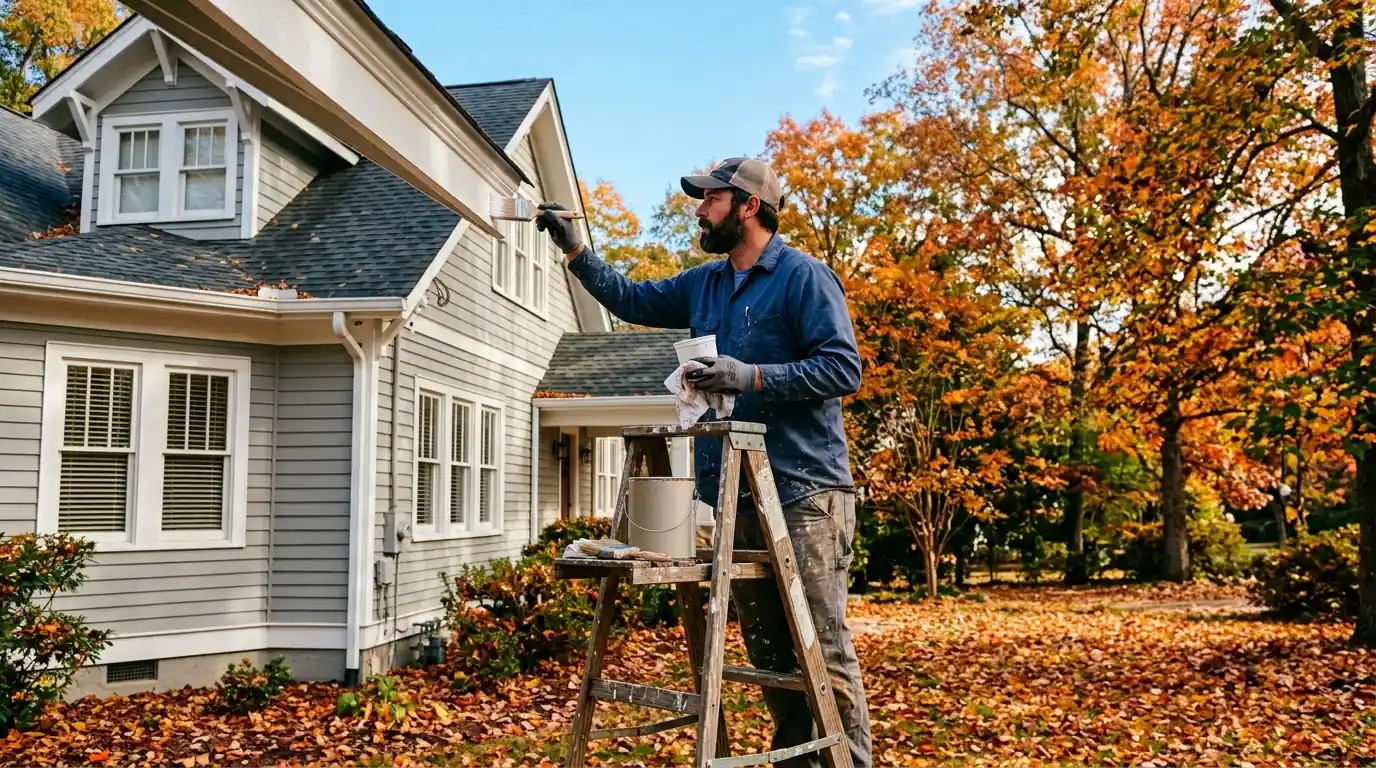
Fall is often the best balance: drier air, steady temperatures and no pollen. Days are shorter, so there are fewer working hours, and falling leaves mean more cleanup on horizontal surfaces.
Winter painting depends on the product and the day. Every exterior paint has a minimum application temperature printed on the can, and cold nights can drop the wall below it. Mild winter stretches still get work done, with shorter days and later starts.
What you can do ahead of time
Whatever the season, a few things help the paint last:
- Fix gutters that overflow onto siding before the painters arrive
- Trim shrubs back from the walls so every surface can be reached
- Plan interior painting for the humid midsummer weeks and exterior for spring and fall
- Book early for late spring and fall, the busiest windows
Questions
Exterior painting timing questions
Late April through early June and September through October usually give the most good painting days.
Yes, with timing: coats in the drier middle of the day, shade-side first, and no painting on damp siding after storms.
Above about 70 percent, latex paint struggles to cure. Painters aim for roughly 40 to 70 percent.
Pine pollen from mid-March to early April sticks to siding and wet paint and weakens the bond.
On mild days above the product's minimum temperature, yes, with later starts and earlier finishes.
Fresh paint needs dry time; crews watch the forecast and stop early if storms are coming.
Related
Services this guide covers
- Exterior house painting in Atlanta
- Pressure Washing and Surface Prep
- Semi-transparent deck stain
- Pergola and arbor staining
More guides
Keep reading
What Exterior House Painting Costs in Atlanta, GA
Per-square-foot ranges, what moves an Atlanta quote, and how often to budget for it.
our exterior painting cost guideWhen Painting a Metal Roof Makes Sense
When a recoat extends a metal roof and when it is past saving.
our metal roof guideDeck Stain vs Paint for Georgia Humidity
Why stain usually outlasts paint on a Georgia deck.
our deck finish guideGet your exterior on the calendar
Call and we'll plan your job around the dry windows, not just an open slot.
Call (470) 887-8741Answered 24/7 from 565 Tift St SW Ste b, Atlanta.
Where we start from