Problem guide
Signs of wood rot to fix before you paint
New paint over rotted wood looks fine for a season, then peels as the rot keeps spreading underneath. Finding it first takes a screwdriver and twenty minutes.
Questions about your own house? We answer 24/7.
By Carla Bingham, Painting and Restoration Guides Editor · Updated September 2026
Quick answer
Wood rot shows up as soft wood that a screwdriver sinks into, paint peeling in one small area, dark or crumbling end grain, gaps opening at sill corners and swollen door jambs. On Atlanta houses, check window sills, the bottom edges of trim and siding, corner boards, fascia, porch columns and door jambs before painting. Rotted wood has to be repaired or replaced before any coating.
Why rot has to be found before painting
Paint slows water down but doesn't stop rot that's already started. Wood that is soft under the paint keeps absorbing water through its end grain and cracks in the film, and the rot spreads outward. Painters around Atlanta see new paint peel within a year when it went on over soft wood.
The repair is also cheaper before painting. A rotted sill found during prep gets fixed and painted with the rest of the house; found a year later, it means scraping and repainting the same area twice.
Where to look on an Atlanta house
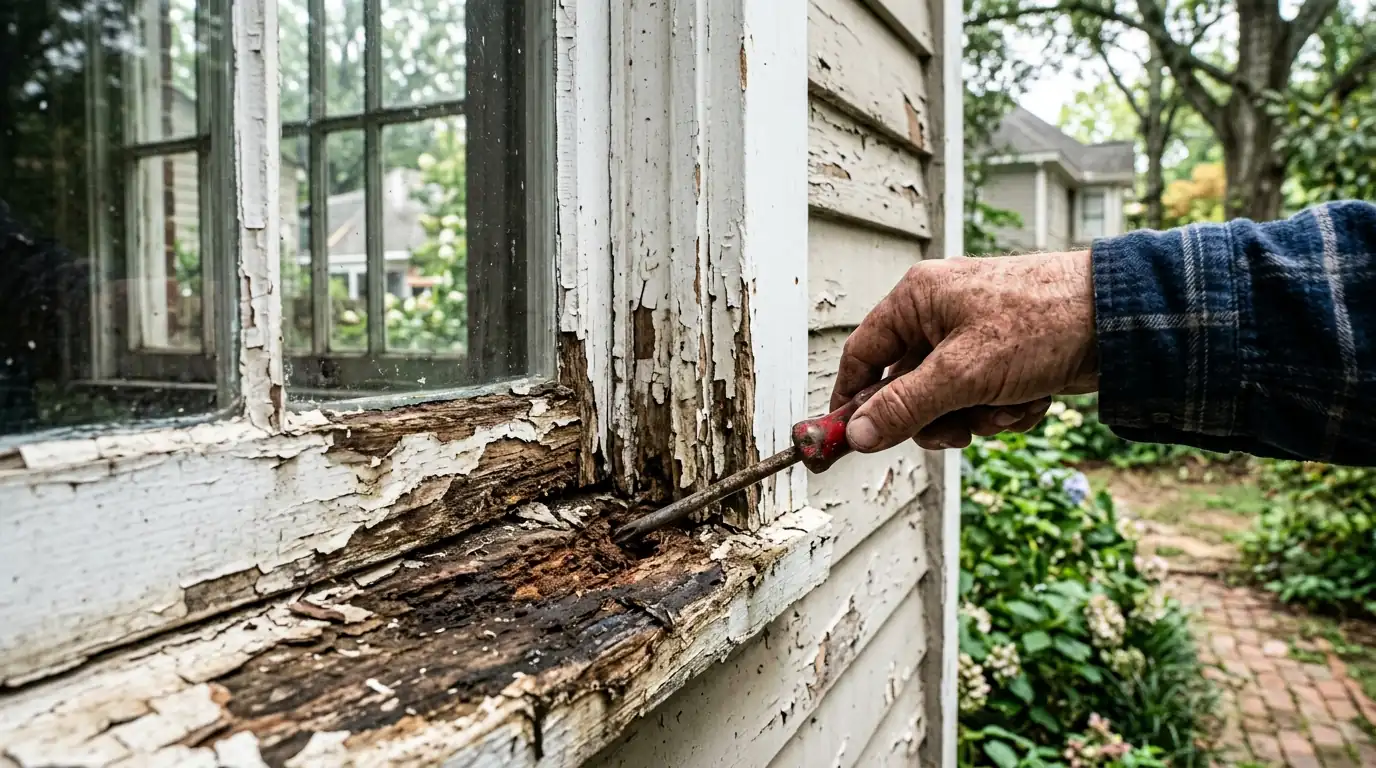
Rot starts where water sits and where paint fails first. Work around the house with a screwdriver or awl and push gently into:
- Window sills, especially the outer edge and corners
- The bottom ends of window and door casings
- Corner boards and the lowest course of siding near the ground
- Fascia boards behind the gutters
- Porch column bases, rails and floorboards
- Exterior door jambs near the threshold
- Deck boards, rim joists and post bases
Georgia's humidity keeps shaded north walls damp enough for rot, while south and west walls crack their paint first under hard sun and let water into the grain.
What rot looks and feels like
The clearest sign is feel: sound wood resists a screwdriver, rotted wood gives way and feels spongy or crumbles. Visually, look for paint that bubbles or peels in one small area, dark stains, end grain that looks fuzzy or broken down, joints that have opened, and in advanced cases, fungus or mushrooms.
Swelling is a sign too. A door that suddenly sticks, or a sill that has lifted at one corner, often has water in the wood.
| Sign | Where | Usually means |
|---|---|---|
| Screwdriver sinks in | Sills, trim ends, jambs | Active rot |
| Peeling in one spot | Around windows and doors | Water getting behind the paint |
| Dark crumbling end grain | Board ends, corners | Water entering through the end grain |
| Gaps at sill corners | Window sills | Wood shrinking as it breaks down |
| Sticking door | Exterior door jambs | Swollen or rotting jamb |
Fixing it: epoxy, splice or replace
Small, shallow rot can be dug out to sound wood, treated with a consolidant and rebuilt with a two-part epoxy filler shaped to the original profile. Rot at one end of a long piece, like the bottom of a door jamb, can be cut out and a new section spliced in. Deep or widespread rot means replacing the whole piece.
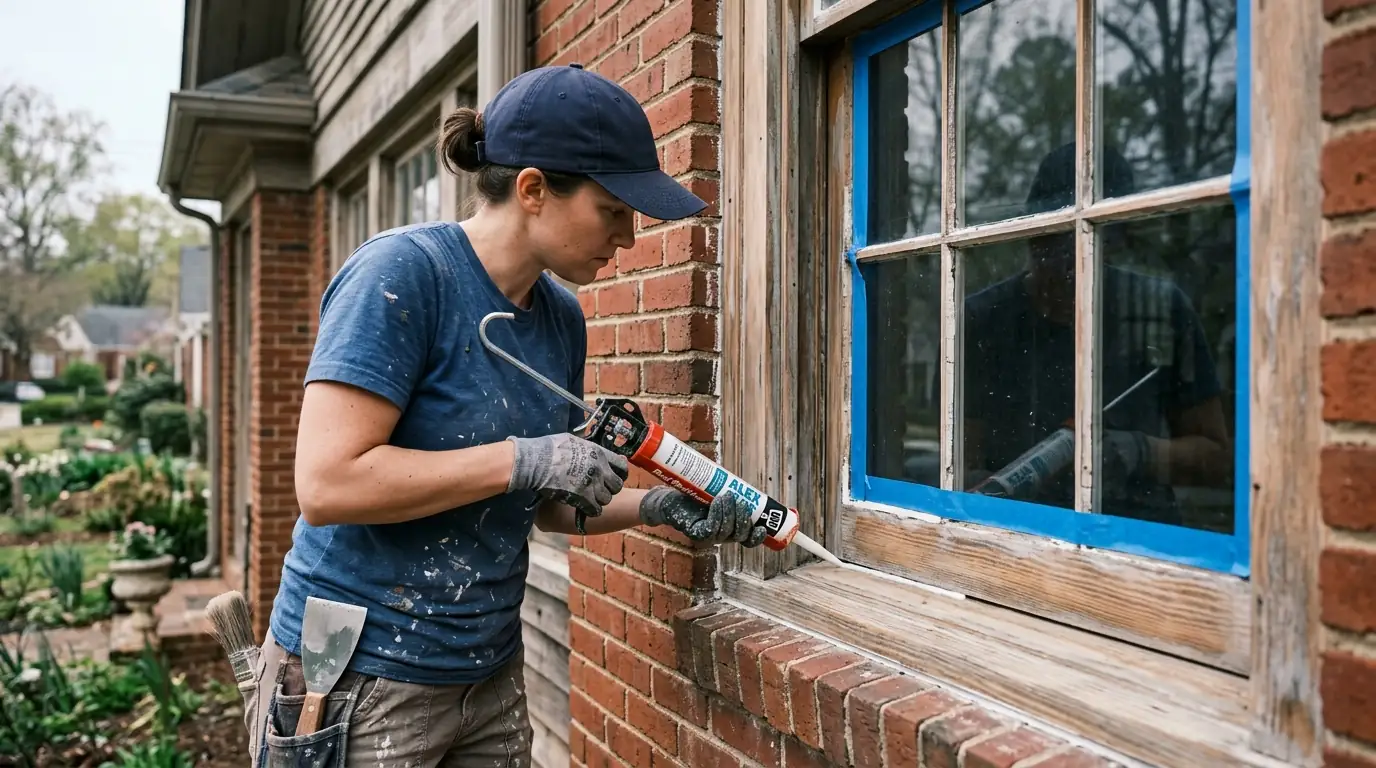
Whichever it is, new wood is primed on every side before installation, especially the cut ends, and the joints are caulked so water can't get straight back in.
Fix the water, not just the wood
Rot has a cause: failed caulk at a window head, a gutter overflowing onto the fascia, splashback at the bottom of a jamb, a board sitting too close to soil or a roof. Georgia's summer storms drive rain behind any joint that has opened. Replacing the wood without fixing the water path just gives the rot new wood to work on.
That's why a good repair includes the boring parts: drip edge behind gutters, clearance above soil and roofs, and new caulk at the joints.
In older houses, go carefully
On houses built before 1978, the paint over rotted wood may contain lead. Removing it is done wet, with plastic underneath and careful cleanup, not with a heat gun or power sander. Old-growth wood in historic houses is often worth saving with epoxy rather than replacing, since it's denser than most new lumber.
Questions
Wood rot questions
Push a screwdriver or awl gently into the wood. Rotted wood gives way; sound wood resists.
No. Paint won't stop rot that has started, and the new paint will peel.
When the rot is small and contained, like a sill corner. Larger or deeper rot is better replaced.
The water source wasn't fixed: caulk, gutters, splashback or soil contact.
Window sills, bottom ends of trim, corner boards, fascia and porch column bases.
It can be on porch posts and rails that carry weight. Those are supported before repair.
Related
Services this guide covers
More guides
Keep reading
Peeling Exterior Paint in Atlanta: What to Do First
What peeling paint is telling you and the order to fix it in.
our peeling paint guidePainting a Pre-1978 Atlanta Home Safely
Lead-safe prep, plaster and old trim in older Atlanta houses.
Painting a Pre-1978 Atlanta Home SafelyWhat Exterior House Painting Costs in Atlanta, GA
Per-square-foot ranges, what moves an Atlanta quote, and how often to budget for it.
how exterior repaints are pricedFind the rot before the paint does
Call and we'll probe every side of the house and write the repairs into the quote.
Call (470) 887-8741Answered 24/7 from 565 Tift St SW Ste b, Atlanta.
Where we start from