Wallpaper removal
Wallpaper removal and wall repainting in Atlanta
Taking wallpaper down is the easy half. Getting the wall behind it smooth enough to paint is where most removal jobs go wrong, and it's the half we spend the most time on.
Calls answered 24/7. Crews staged from the Atlanta service office.
- Answered 24/7
- Paste fully washed off
- Walls skimmed before paint
Quick answer
Wallpaper removal in Atlanta usually means scoring and soaking the paper, peeling it in layers, then washing off every trace of paste, because paint over leftover paste cracks and peels. Torn drywall paper is sealed with a primer and skim coated, and the walls are primed and painted. Older homes may have paper applied straight to plaster or several layers deep.
Updated September 2026
The job
What happens after the paper comes off
Wallpaper paste stays on the wall after the paper is gone, and paint over it wrinkles and cracks. We wash walls until the paste is gone, then let them dry.
Paper hung on unsealed drywall often tears the drywall's face when removed. Those areas get a sealing primer to stop bubbling, then a skim coat so the wall paints smooth.
What moves the price
What moves the price of wallpaper removal
- Number of layers
Several papers stacked on top of each other take longer.
- Painted-over paper
Paint blocks remover solution and slows stripping.
- Wall damage
Torn drywall face needs sealing and skim coating.
- Plaster or drywall
Plaster may need crack and loose-spot repair.
- Room size and height
Tall walls and stairwells take more setup.
- Repaint scope
Walls only, or walls, ceiling and trim.
What we handle
Wallpaper work we take on
Wallpaper stripping
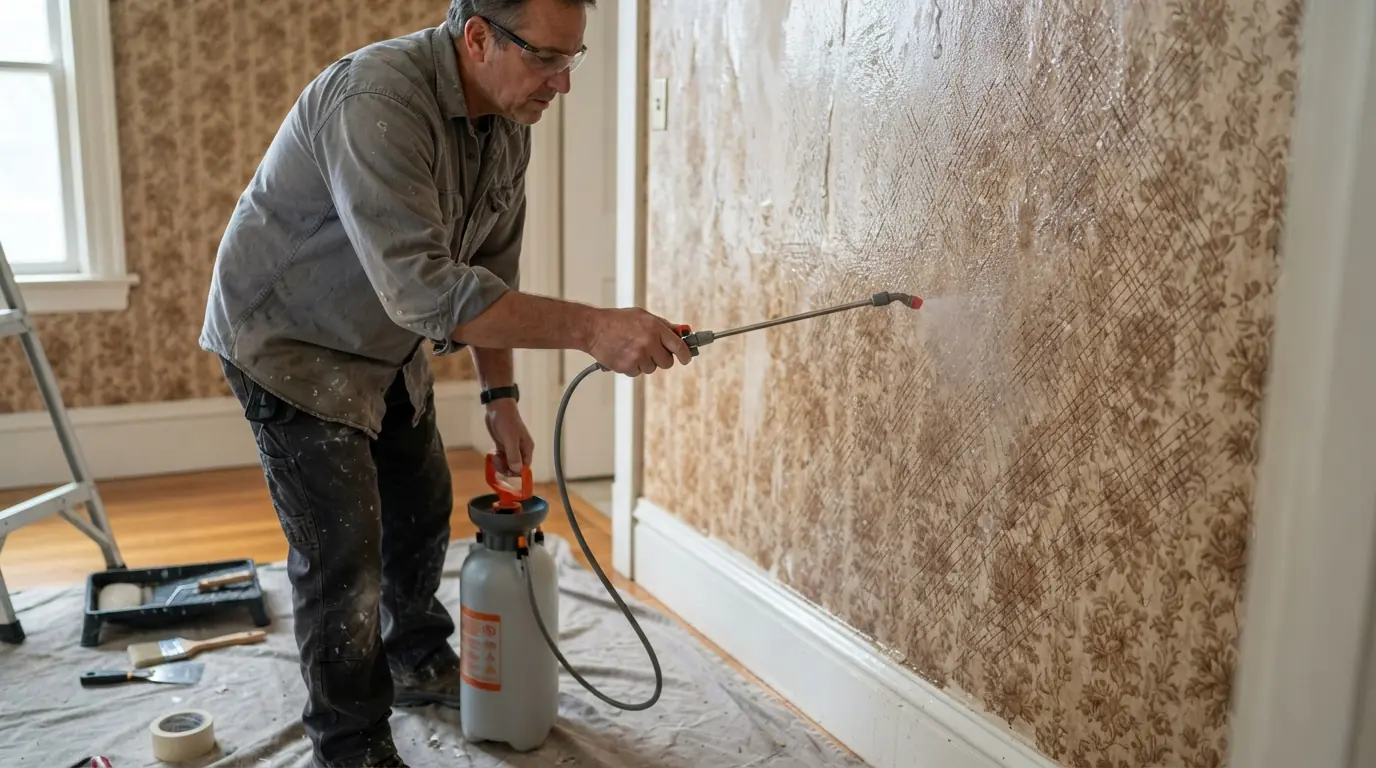
Strippable papers peel off dry; most older papers don't. We score the surface, soak it with a remover solution or steam, and peel the face and backing in layers, working a section at a time so the wall doesn't stay wet longer than needed. Floors and outlets are protected from the water. Painted-over wallpaper takes longer, since paint seals the paper and blocks the solution, and we'll warn you on the walk-through if that's what we find.
Skim coat after removal
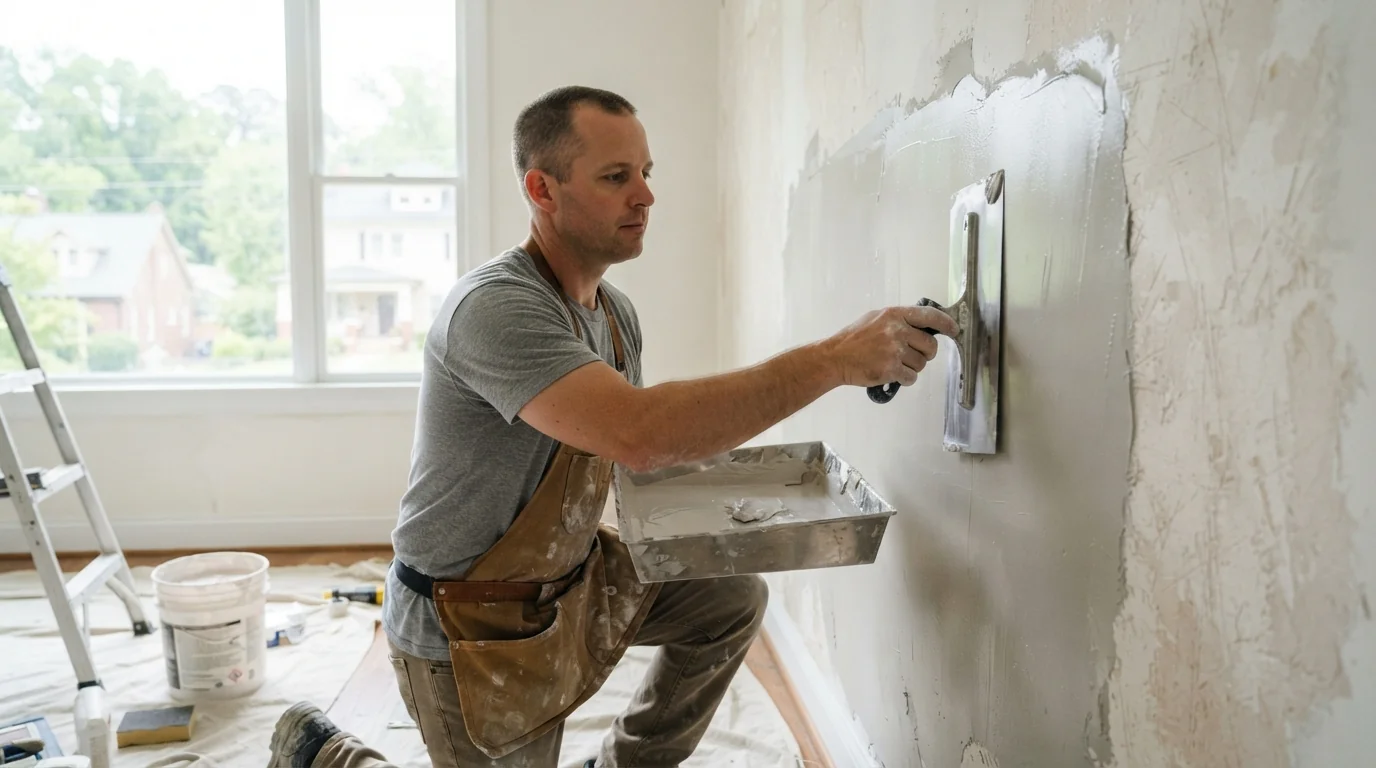
When wallpaper was hung on bare drywall, removal often tears the drywall's paper face and leaves fuzzy, damaged patches. Painting over those makes them bubble. We seal torn areas with an oil or shellac-based primer, then skim coat the wall with joint compound, sand it smooth and prime it again. On plaster walls, loose spots are repaired and cracks filled before the skim coat, so the finished wall looks like it was never papered. The skim is checked with a low work light before primer.
Border removal
Wallpaper borders at the ceiling or chair-rail height are a common holdover and usually come off quicker than full walls. The difficulty is the paint around them: removing a border often lifts some of the surrounding paint and leaves a ridge where the border edge sat. We remove the border, wash off paste, feather the edge with compound so no ridge shows, and repaint the whole wall so the old border line disappears completely. A new chair rail can go where the border was, if you'd like one.
Repaint after wallpaper
Walls that were wallpapered for years have never been painted, or were painted long ago, so they get a primer before color. We use a primer that seals any remaining paste traces and evens out patches of skim coat and bare drywall, then apply two finish coats. Rooms that had busy patterns often look larger in a single color afterward. Ceiling and trim can be painted in the same visit so the room is finished in one go. Leftover paint is labeled and left for future touch-ups.
Around Atlanta
Wallpaper in Atlanta's older homes
In Kirkwood, laid out in the 1890s in the garden-suburb style, and in Grant Park, where many 1890s to 1940s houses have been restored while keeping their character, we often find several generations of wallpaper stacked on original plaster, sometimes painted over. Those walls take patience: each layer is softened and removed separately, and the plaster underneath is repaired before skimming, so the room keeps its old walls without the old paper.
What is included
What a wallpaper removal job includes
- Test strip to check paper and wall
- Floor, outlet and trim protection
- Scoring, soaking and layer-by-layer removal
- Paste washed off completely
- Torn drywall sealed with primer
- Skim coat, sanding and repair
- Primer and two finish coats
Do it yourself or call
Stripping it yourself vs having it done
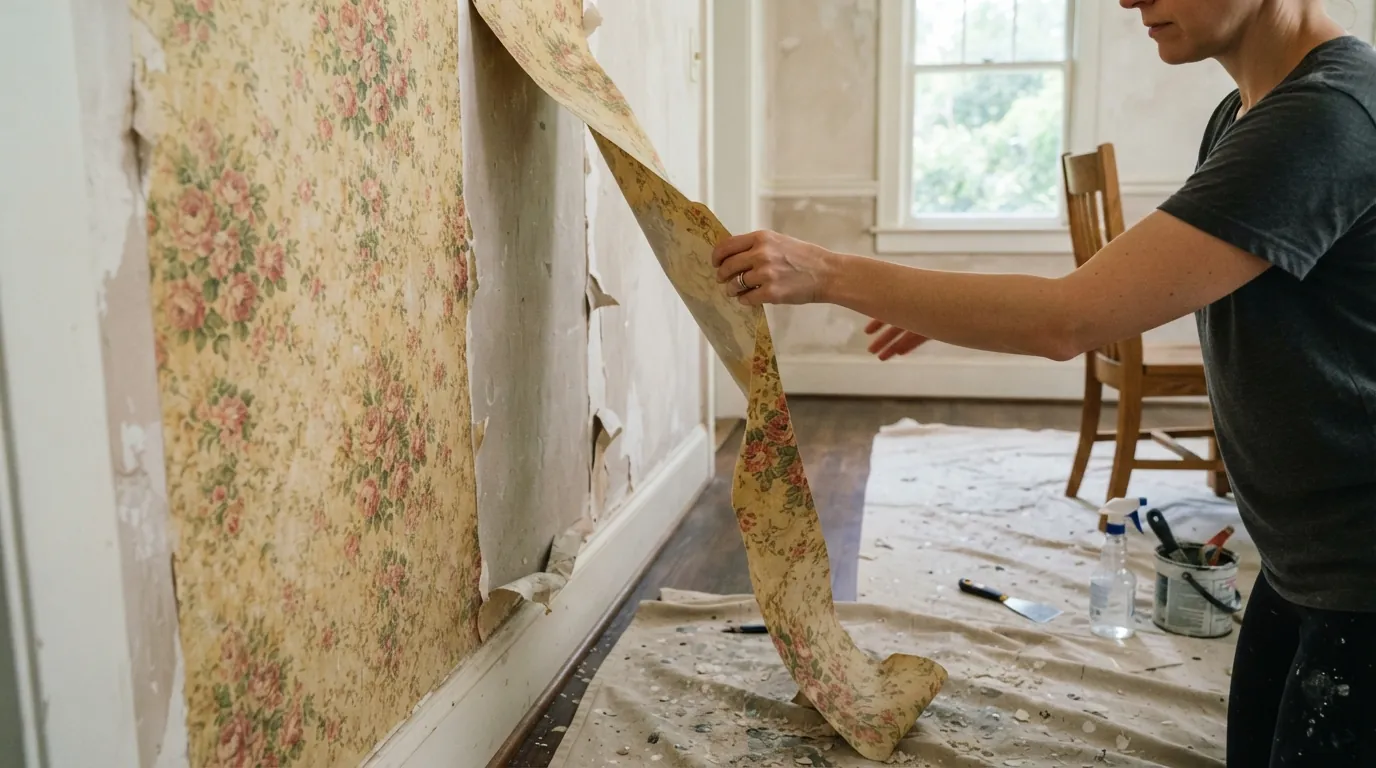
Wallpaper removal is a common weekend project. These are the steps that decide whether the wall paints well afterward.
| Step | Common DIY result | What we do |
|---|---|---|
| Paste | Left on the wall, paint cracks later | Washed until the wall is clean |
| Torn drywall | Painted directly, bubbles appear | Sealed with primer, then skimmed |
| Border edges | Ridge shows through new paint | Feathered with compound first |
Step by step
How a wallpaper job runs
- 1
Test
A small area stripped to see how the paper and wall behave.
- 2
Protect
Floors, outlets and trim covered against water and paste.
- 3
Strip and wash
Paper removed layer by layer, paste washed off.
- 4
Seal and skim
Torn areas sealed, walls skim coated and sanded.
- 5
Prime and paint
Primer and two finish coats, then cleanup.
Questions
Wallpaper removal questions
It's possible but risky; seams show and the paper can bubble. Removing it gives a better wall.
Torn drywall paper absorbs paint moisture. It needs a sealing primer before paint.
Repeated washing with warm water and remover until the wall no longer feels slick.
Some tearing is common on unsealed drywall; we repair and skim those areas.
Yes. Plaster usually handles removal well, though old layers take time.
Also in Interior Painting
Related work from the same crews
- Accent Wall and Specialty Finishes
- Interior Staircase Painting
- Wallpaper Installation
- Interior Woodwork Staining and Refinishing
- Interior house painting in Atlanta
Before you book, read getting ready for painters.
Ready to see bare walls again?
Tell us which rooms and roughly how old the paper is, and we'll set up a test strip.
Call (470) 887-8741Answered 24/7 from 565 Tift St SW Ste b, Atlanta.
Where we start from