Trim and door painting
Trim, door and baseboard painting in Atlanta homes
Walls get the attention, but trim is what makes a room look finished. Crisp baseboards, clean casings and smooth doors change a room even when the walls stay the same color.
Calls answered 24/7. Crews staged from the Atlanta service office.
- Answered 24/7
- Hard trim enamel
- Every joint caulked
Quick answer
Trim and door painting in Atlanta is detail work priced separately from walls, since cabinetry, trim and ornate molding add roughly $2 to $6 per square foot in local cost data. We clean, sand, fill and caulk every piece, prime bare or glossy spots, and brush two coats of a hard enamel that resists scuffs and doesn't stay tacky. Doors can come off for a smoother finish.
Updated September 2026
The job
Why trim needs its own approach
Baseboards take vacuum knocks and shoes, door edges take hands, and old oil-based trim paint won't hold latex unless it's sanded and primed. Yellowed trim is usually old oil paint aging in low light.
We use waterborne trim enamels such as Benjamin Moore Advance or Sherwin-Williams Emerald Urethane, which level smooth like oil but stay white, and prime slick surfaces with Zinsser or Kilz bonding primers.
What moves the price
What moves the price of trim painting
- Linear feet and door count
More trim and doors mean more brush hours.
- Profile detail
Deep, ornate profiles take longer than flat stock.
- Old oil paint
Glossy oil trim needs sanding and bonding primer.
- Doors on or off
Removing doors gives a smoother finish but adds handling.
- Caulk and fill
Gapped, dented trim needs more prep.
- Color change
Stained wood to paint needs primer and extra coats.
Atlanta market range from a published local cost guide, not our price: Atlanta interior painters charge $20 to $90 per hour; cabinetry, textured walls or ornate trim add about $2 to $6 per square foot.
What we handle
Trim and doors we paint
Baseboard and casing painting
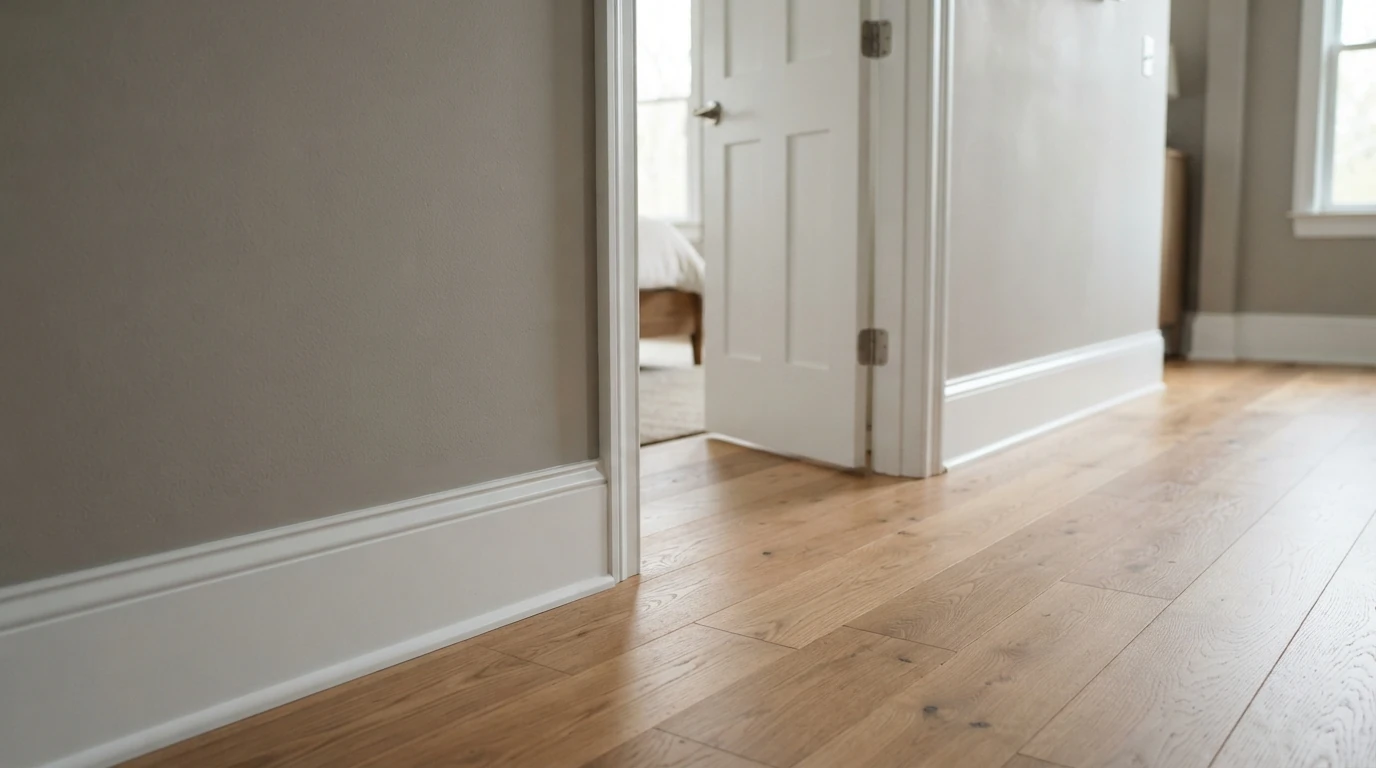
Baseboards and door and window casings are the most-handled and most-knocked trim in a house. We wash off grime, sand the old finish to dull it, fill dents and nail holes, and caulk the gaps where trim meets wall and floor. Floors are taped with a sealed edge so paint doesn't creep onto wood or tile. Two coats of trim enamel are brushed on, and the final line against the wall is cut by hand, not taped, for a clean edge.
Interior door painting
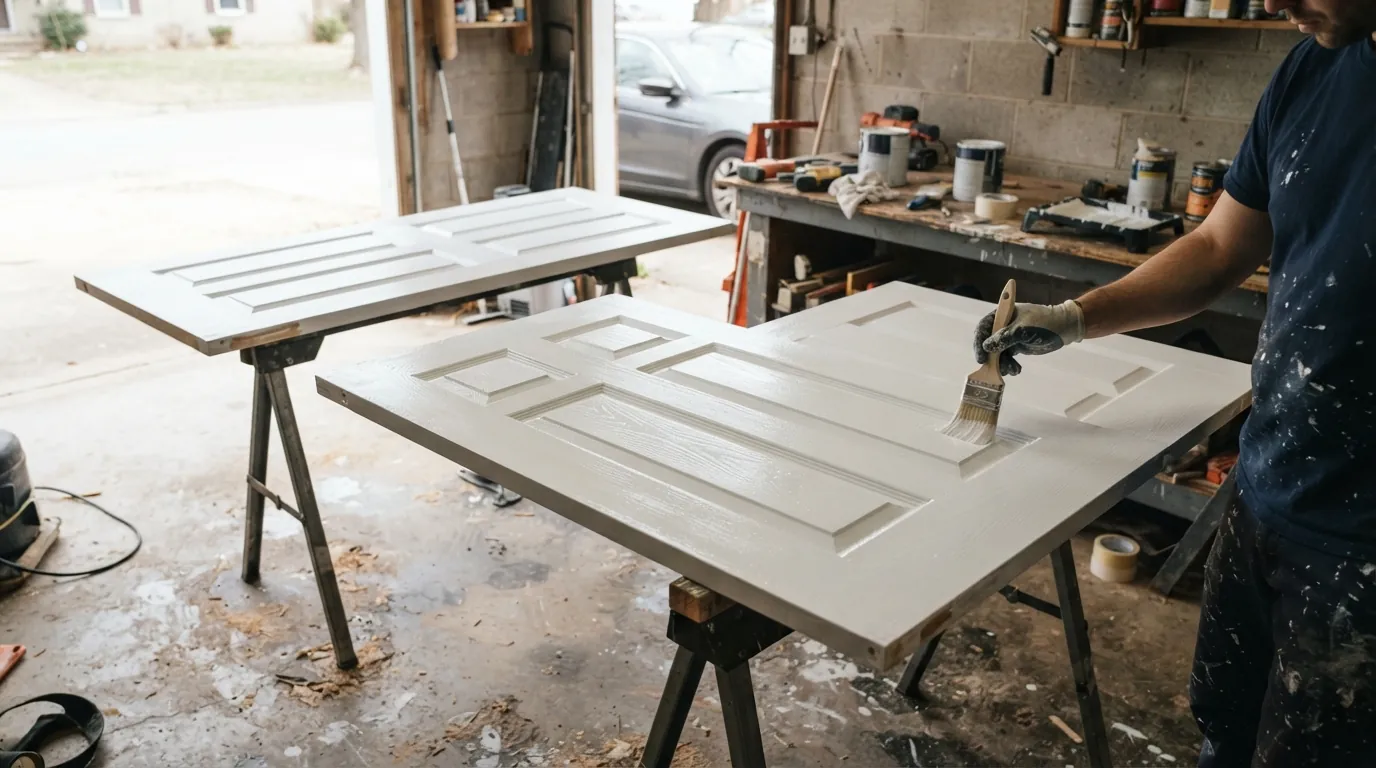
Six-panel and flat doors show brush marks and drips more than any other surface. For the smoothest result, doors come off their hinges, lie flat, and get sprayed or rolled and tipped off in a clean area; otherwise we paint them in place, panels first, then rails and stiles in order. Hardware is removed rather than taped around. Door edges are painted too, and doors are rehung only after the paint has set so they don't stick to the stops.
Crown molding painting
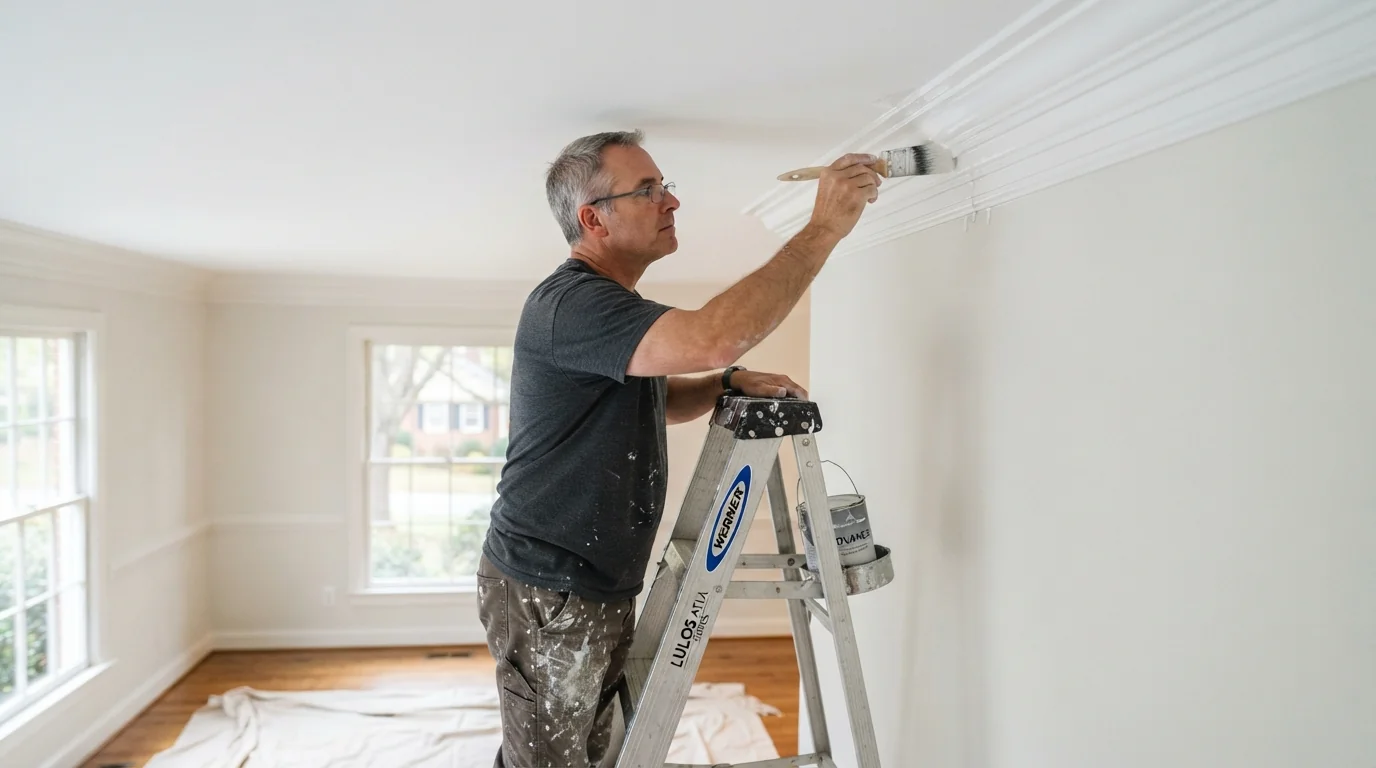
Crown sits at the ceiling line, so it demands clean cuts on two sides at once. We fill and caulk the joints, especially the gaps that open up along the top edge as the house moves, then brush two coats of trim enamel. If the ceiling and crown are being painted together, the ceiling goes first and the crown is cut in against it. Dark or yellowed crown under a white ceiling is one of the quickest updates a room can get.
Wainscoting and panel painting
Wainscoting, raised panels and chair rails collect dust in every profile and show every drip in the corners. We clean each panel, sand lightly, caulk the frame joints and prime any bare wood, then brush the profiles first and roll or brush the flat fields for an even finish. In dining rooms and halls, wainscoting is often painted in a contrasting color to the wall above, and we lay out the color break at the chair rail carefully. Samples of both colors go up first.
Around Atlanta
Trim in Atlanta's older houses
In Westview, where long-empty houses are being restored rather than torn down, original trim often survives under many coats of paint, and in older Atlanta homes that level of detail raises trim labor 20 to 40 percent over a plain modern interior. Deep profiles clogged with old paint are cleaned out, loose layers scraped, and sanding in these houses is done as lead-safe work before any new enamel goes on.
Coatings and materials we work with
What is included
What a trim and door job includes
- Floors taped with sealed edges
- Hardware removed and bagged
- Trim cleaned and sanded
- Dents and nail holes filled
- Gaps at walls and floors caulked
- Bonding primer on glossy or bare areas
- Two coats of hand-brushed enamel
Step by step
How a trim job runs
- 1
Walk-through
Trim, doors and finish condition checked; sheen agreed.
- 2
Protect
Floors taped with sealed edges, hardware removed.
- 3
Prep
Clean, sand, fill and caulk every piece.
- 4
Prime and paint
Bonding primer where needed, two coats of enamel.
- 5
Rehang and review
Doors rehung, hardware back on, touch-ups done.
Questions
Trim and door painting questions
Old oil-based paint yellows as it ages, especially out of direct light. Waterborne enamels stay white.
Yes, after sanding and a bonding primer. Without that, latex peels off oil paint.
Semi-gloss is the most durable and easiest to clean; satin is softer-looking. Both work.
Yes, with cleaning, sanding and a stain-blocking primer so tannins don't bleed through.
Not always, but removing them gives the smoothest finish.
Also in Interior Painting
Related work from the same crews
- Ceiling painting in Atlanta
- Wallpaper Removal and Wall Repaint
- Limewash and venetian plaster
- Handrail and baluster painting
- Peel-and-stick wallpaper
Before you book, read what to move before painting.
Make the rooms look finished
Tell us which rooms and doors, and we'll set up a walk-through.
Call (470) 887-8741Answered 24/7 from 565 Tift St SW Ste b, Atlanta.
Where we start from