Historic home painting
Painting historic and pre-1978 homes in Atlanta
Old houses were built with better wood than new ones and painted many more times. The work is in the layers underneath, and in fixing the trim without losing what makes the house what it is.
Calls answered 24/7. Crews staged from the Atlanta service office.
- Answered 24/7
- Lead-safe work practices
- Rot and trim repair included
Quick answer
Historic home painting in Atlanta means treating old paint as possible lead paint in any house built before 1978, then repairing wood before coating. Detailed period trim and plaster run 20 to 40 percent higher in labor than a newer house, according to 2026 Atlanta cost data. We contain, wet-scrape, repair and prime before any finish goes on.
Updated September 2026
The job
How we approach an older house
The top coat is rarely the problem on an old house. Decades of layers crack and let go together, and paint laid over soft sills and loose glazing fails within a season.
So the work is prep-first: containment around the house, wet scraping instead of dry sanding, repair of rotted trim, and a primer chosen to bond to aged surfaces before two finish coats.
What moves the price
What moves the price of painting a historic home
- Lead-safe setup
Containment, wet work and daily cleanup add time to every stage.
- Paint build-up
Heavy layers that have failed together may need removal to sound wood.
- Rot and trim repair
Sills, rails and brackets are rebuilt before any coating.
- Number of colors
Body, trim, sash and accent colors each need separate cut lines.
- Window glazing
Loose putty on old sashes is reglazed before painting.
- Height and detail
Gables, turrets and brackets need ladders, staging and brush time.
Atlanta market range from a published local cost guide, not our price: Atlanta interior painting averages $2,021, with most projects between $964 and $3,079; prep adds $0.50 to $3 per square foot; older homes with detailed trim and plaster run 20 to 40 percent more in labor.
What we handle
Work on historic houses
Pre-1978 lead-safe repainting
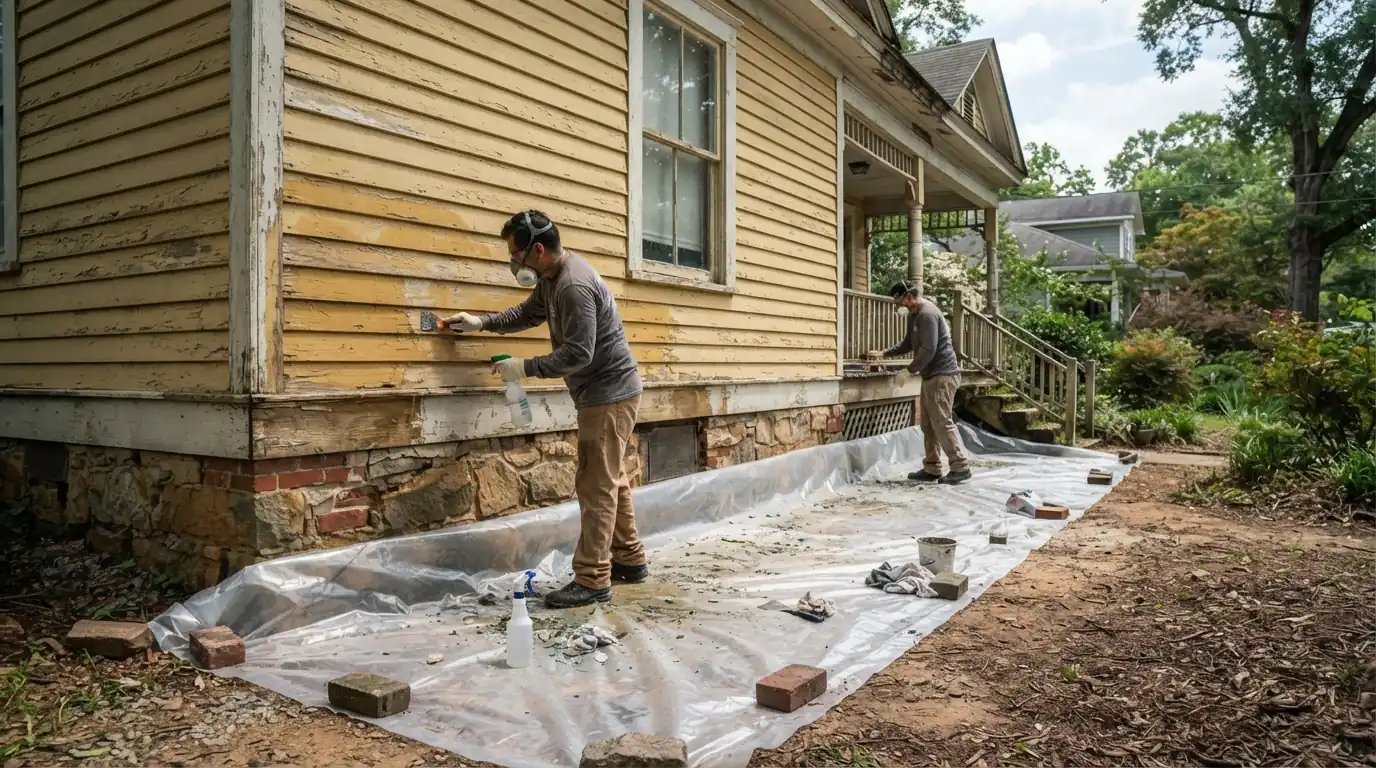
In any house built before 1978, we assume the old paint may contain lead until testing says otherwise. That changes how the work is done: ground and floors are covered with plastic, scraping is done wet, power sanding and open-flame stripping are off the table, and debris is bagged and cleaned with HEPA vacuums every day. It is slower and it costs more than ordinary prep, but it keeps dust out of the yard, the soil and your family's air while the house is being repainted.
Victorian and Craftsman exterior repaint
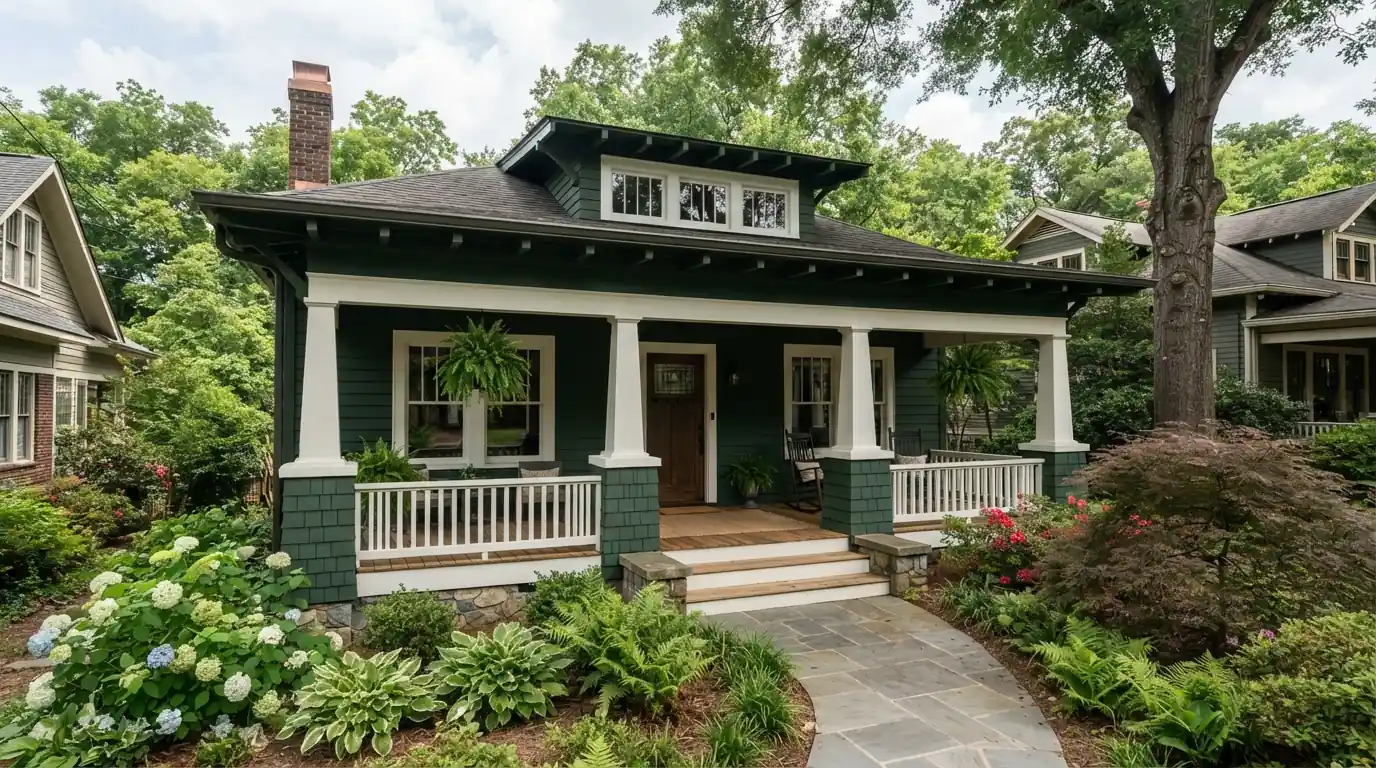
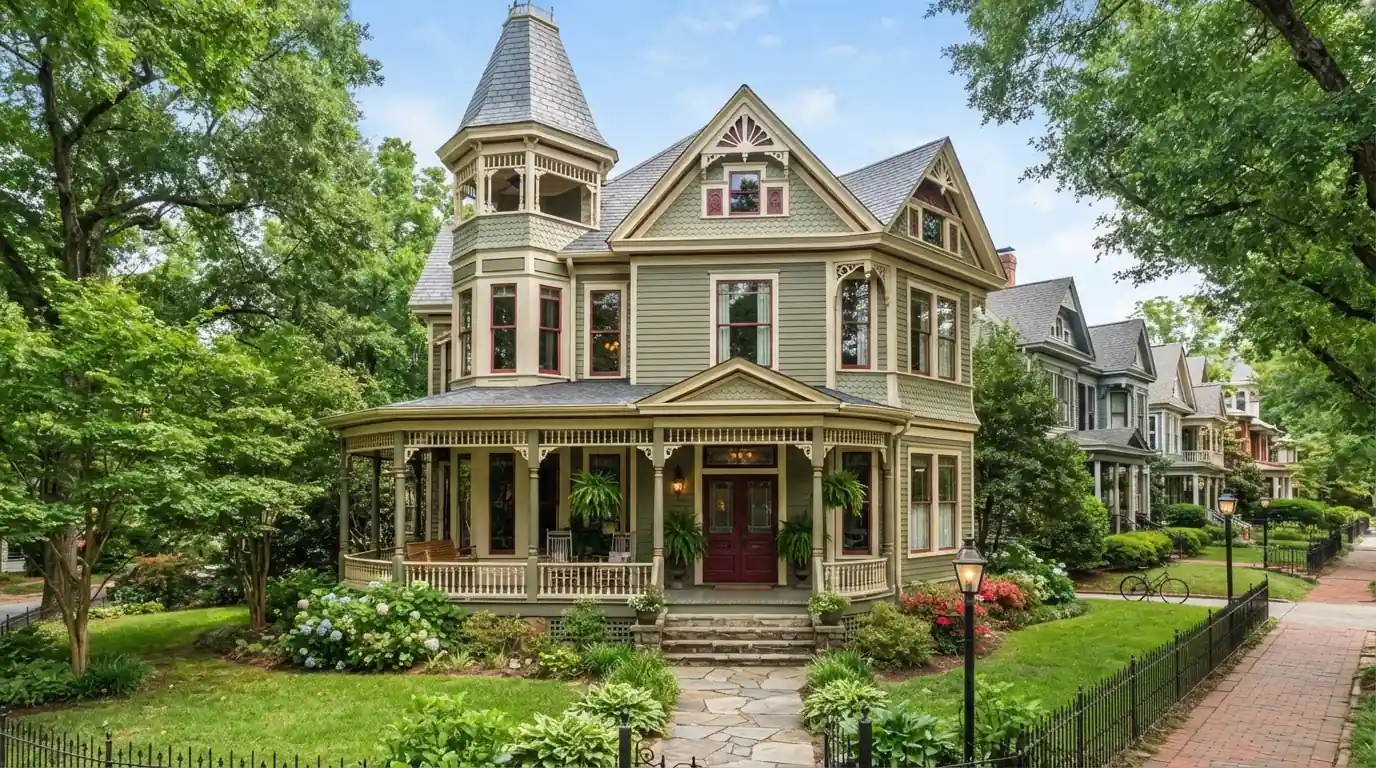
Victorian and Queen Anne houses carry shingles, spindles, brackets and several body and trim colors, and Craftsman bungalows have exposed rafter tails, deep porches and tapered columns. Each needs its own prep and brush time. We repair or replace rotted pieces in matching profiles, reglaze loose window putty where needed, prime bare wood and apply two coats. The multi-color schemes these houses were designed for are planned on paper first, so every band of trim has a color before we start.
Period trim and porch painting
Porches take the worst of the weather on an old house: floorboards, rails, columns and ceilings. We probe the porch for soft wood, replace failing boards and rail sections, and paint floors in a porch-and-floor enamel rather than wall paint. Ceilings are often painted a pale blue here, the traditional Southern haint blue. Inside, original trim, doors and built-ins are prepared by hand with the same lead-safe care, and painted rather than replaced wherever the wood is sound.
Historic color matching
Some owners want the house back in the colors it was built in, others want a period-appropriate palette that suits the style. We can scrape a small hidden area to reveal the earlier color layers, then match the one you choose. Major paint makers publish historic color collections, which gives a starting point for Victorian and Craftsman schemes. If your house sits in a designated historic district, check any required approval for exterior color changes before we order paint.
Around Atlanta
The old housing around our Atlanta office
Our service office sits in West End, one of the oldest neighborhoods in the city, where Victorian and Queen Anne houses from the 1880s and 1890s stand beside 1920s Craftsman bungalows on streets like Peeples, Holderness and Oglethorpe. Next door in Westview, long-empty homes from the 1910s onward are being brought back. Nearly all of it predates 1978, so lead-safe setup is our default on these streets, not an extra.
What is included
What our lead-safe prep includes
- Plastic sheeting on the ground or floors under work areas
- Work areas marked and kept clear of children and pets
- Wet scraping and wet sanding only
- No open-flame stripping or high-speed power sanding
- Debris bagged and removed daily
- HEPA vacuum cleanup of every work area
- Final cleaning check before the site is released
Step by step
How a historic repaint runs
- 1
Survey the house
Every elevation checked for failing layers, rot and loose glazing.
- 2
Contain
Plastic on the ground and floors, work areas marked off.
- 3
Wet-scrape and repair
Loose paint removed wet, rot cut out and rebuilt.
- 4
Prime
Bonding primer on bare and repaired wood.
- 5
Paint and clean
Two finish coats, then HEPA cleanup and a final walk-around.
Warning signs
Signs an old house needs more than a new coat
- Alligatoring
Deep cracking in a scaly pattern means the layers have failed together.
- Paint lifting in sheets
Old coats letting go from the wood, not just the top layer.
- Soft sills and rails
Rot under the paint, common at window sills and porch rails.
- Loose window glazing
Cracked or missing putty lets water into the sash.
- Bare gray wood
Weathered wood that needs cleaning and priming before paint.
- Chalky powder
Old paint breaking down; on pre-1978 houses, treat it as possible lead.
- Peeling porch ceiling
Moisture from below or a roof leak above.
Questions
Historic home painting questions
If it was built before 1978, it may. We treat it as if it does unless a test shows otherwise.
Only where the layers have failed. Sound old paint is cleaned, scuffed and primed over.
Usually. Rotted sections are rebuilt in matching profiles and the rest is kept.
Often three to five: body, trim, sash and one or two accents, planned before we start.
Yes, floors in a porch-and-floor enamel, ceilings often in a traditional pale blue.
Also in Commercial & Specialty
Related work from the same crews
- New construction painting in Atlanta
- Commercial painting in Atlanta
- Apartment, condo and hoa painting in Atlanta
- Epoxy garage and concrete floor coating in Atlanta
Before you book, read our older homes guide.
Bring the old house back without losing it
Tell us the age and style of the house and what's failing, and we'll book a survey of every side.
Call (470) 887-8741Answered 24/7 from 565 Tift St SW Ste b, Atlanta.
Where we start from