Stucco painting and repair
Stucco painting and repair across Atlanta
Stucco cracks as a house settles and its finish chalks in the sun. We repair the cracks so they don't telegraph through, then coat the wall in a finish made for masonry.
Calls answered 24/7. Crews staged from the Atlanta service office.
- Answered 24/7
- Cracks repaired before coating
- Masonry-rated finishes
Quick answer
Stucco painting in Atlanta starts with crack repair, because paint alone won't hide or bridge a moving crack. We rout and fill cracks with a flexible masonry patch, then apply either a breathable masonry paint or an elastomeric coating that stretches over hairlines. In summer humidity above 70 percent, coating waits for a drier window so it cures properly.
Updated September 2026

The job
Why stucco needs its own approach
Stucco is porous and alkaline, it cracks as framing moves, and it holds water in its surface after rain. Paint that doesn't suit it blisters, peels or lets hairline cracks show within a year.
We use masonry systems such as Sherwin-Williams Loxon primer with ConFlex elastomeric, or a breathable acrylic where the wall needs to release moisture. On EIFS we follow the maker's guidance, such as Sto or Dryvit, and use compatible coatings only.
What moves the price
What moves the price of stucco painting
- Amount of cracking
Many cracks means more routing, filling and texture matching.
- Elastomeric or paint
Elastomeric uses far more material per square foot.
- Stucco or EIFS
EIFS needs system-compatible materials and careful joint work.
- Patching needed
Damaged sections need layered repair and cure time.
- Height and access
Upper walls need ladders or staging.
- Trim and details
Windows, quoins and foam trim add brush work.
What we handle
Stucco work we take on
Stucco crack repair
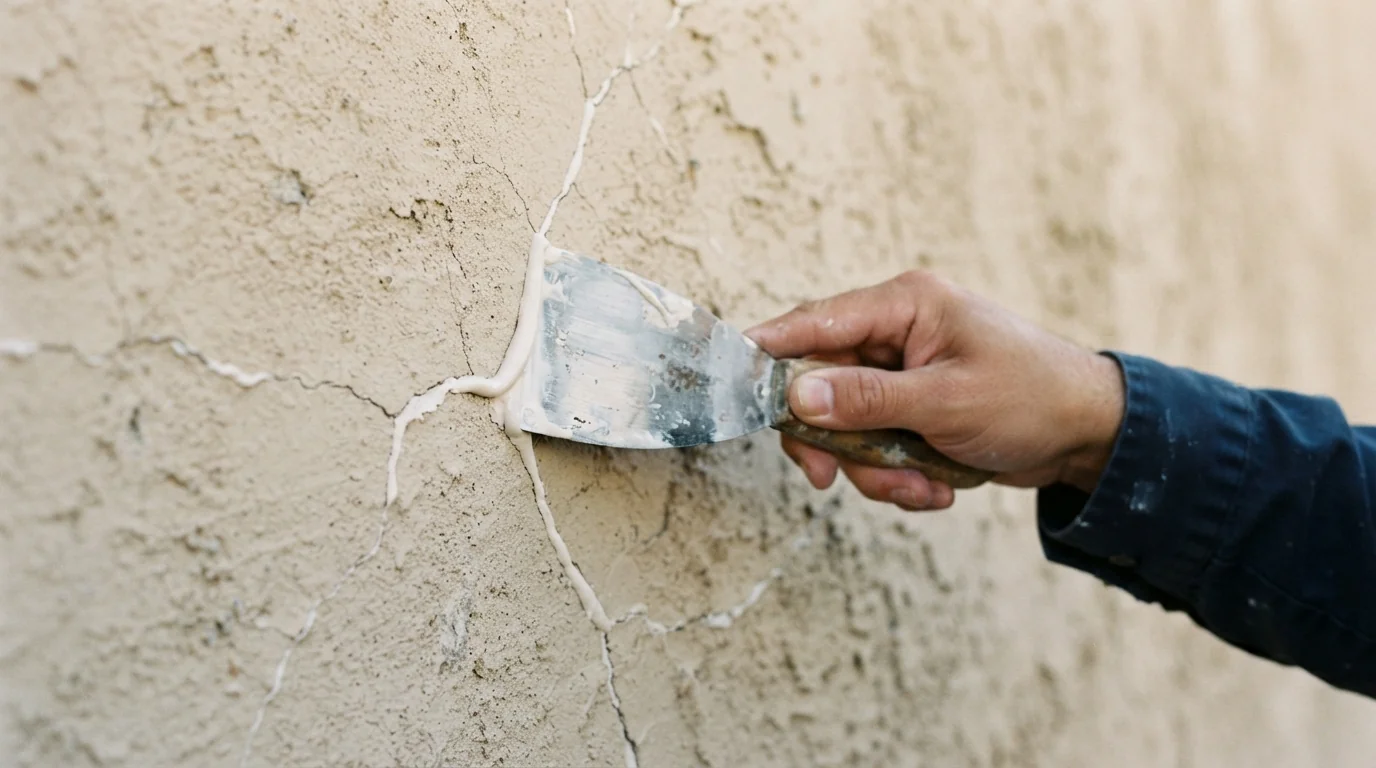
Hairline cracks are normal in stucco and mostly cosmetic, but they let water in over time. Wider or stepped cracks can mean movement that keeps going. We rout hairlines open slightly, clean out dust and fill them with a flexible masonry sealant or patch, then texture the repair to match the wall. Cracks that reopen quickly or run in stair steps from windows get pointed out as possible structural movement, because coating over an active crack only hides it for a season.
Elastomeric stucco coating
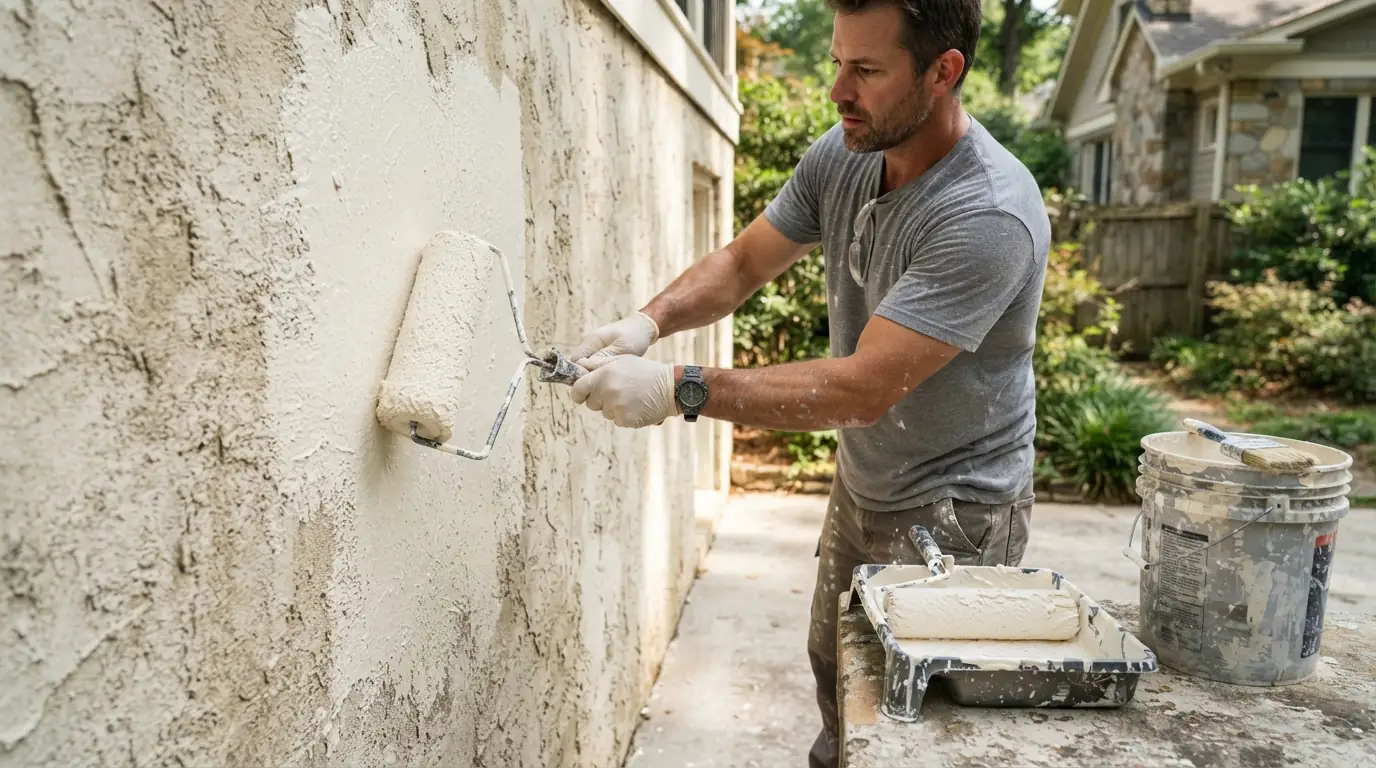
Elastomeric coatings go on much thicker than paint and stretch as the wall moves, so they bridge hairline cracks and resist wind-driven rain. They suit sound stucco with a lot of fine cracking. The tradeoff is breathability: on walls that already hold moisture, a thick film can trap it. We check for damp areas, staining and soft spots before recommending elastomeric, and apply it at the thickness the maker specifies, usually two coats over a masonry primer. Thin application is the most common reason it fails early.
EIFS painting
EIFS, sometimes called synthetic stucco, is foam board with a thin reinforced finish coat. It looks like stucco but behaves differently: it dents, it can hide water behind it if joints and flashing fail, and it needs coatings approved for the system. We inspect sealant joints around windows and penetrations, recaulk where needed, and use an acrylic finish compatible with the manufacturer's system. Any soft or damaged area is repaired with matching mesh and base coat before paint. High-pressure washing is never used on it.
Stucco patching
Holes from old fixtures, impact damage and crumbling sections near grade are patched rather than cracked-filled. We remove loose material back to sound stucco, apply patching layers that match the original thickness, and texture the final coat to blend with the surrounding wall. Patches need to cure before painting, so the coating is scheduled a few days later. Where stucco meets soil or mulch, we look for moisture wicking up, since that often explains why the bottom edge failed.
Your options
Choosing a stucco coating
Three common finishes for stucco and how they behave on an Atlanta house.
| Coating | Crack bridging | Breathability | Best for |
|---|---|---|---|
| Masonry acrylic paint | Low | Good | Sound stucco, color change |
| Elastomeric | High | Lower | Walls with many hairline cracks |
| Mineral or silicate finish | Low | Excellent | Older stucco that holds moisture |
Around Atlanta
Stucco and Atlanta's wet summers
Georgia's heavy summer storms push water into every weak point in a painted wall, and when moisture gets behind a coating it lifts it off from the inside. On stucco that shows up as blisters, peeling near windows and staining below sills. Atlanta humidity also routinely tops 70 percent in summer, which keeps masonry coatings from curing, so we schedule stucco work for drier stretches and check walls for trapped moisture before choosing a finish.
Coatings and materials we work with
Step by step
How a stucco job runs
- 1
Inspect
Cracks mapped, moisture checked, stucco or EIFS confirmed.
- 2
Clean
Low-pressure wash to remove dirt, chalk and mildew.
- 3
Repair
Cracks filled, damaged areas patched and textured, left to cure.
- 4
Prime and coat
Masonry primer, then paint or elastomeric at the right thickness.
- 5
Review
Walls checked with you, joints and trim touched up.
Warning signs
Signs your stucco needs attention
- Hairline cracks
Fine cracks that let water into the surface.
- Stepped cracks at windows
Movement worth checking before coating.
- Blistering paint
Moisture pushing the coating off from behind.
- Staining below sills
Water running off windows into the wall.
- Chalky surface
Old finish breaking down in the sun.
- Crumbling near the ground
Moisture wicking up from soil or mulch.
- Soft or hollow spots
Possible water damage, especially on EIFS.
Questions
Stucco painting questions
For walls with many hairline cracks, often yes. On walls that hold moisture, a breathable masonry paint can be safer.
Not if they're opened and filled first. Unfilled cracks show through almost any coating.
EIFS sounds hollow and feels slightly soft when pressed. We confirm during the inspection.
Only at low pressure. High pressure can damage the surface and force water into cracks.
Most hairlines don't. Wide, stepped or fast-returning cracks are worth checking by a structural pro.
Also in Exterior Painting
Related work from the same crews
- Deck Staining and Sealing
- Fence, Pergola and Arbor Staining
- Exterior Doors, Shutters and Garage Doors
- Soft wash for siding
- Porch and step railing painting
Before you book, read what peeling paint means.
Cracked or chalky stucco? Start with an inspection
Tell us what the walls look like and we'll set up a time to map the cracks and check for moisture.
Call (470) 887-8741Answered 24/7 from 565 Tift St SW Ste b, Atlanta.
Where we start from