Wood rot repair
Wood rot repair for Atlanta sills, jambs, trim and columns
Rot spreads quietly under paint until a screwdriver sinks into the sill. We cut back to sound wood, rebuild or replace the piece, and seal and paint it so water can't get back in.
Calls answered 24/7. Soft wood near a door or column gets looked at first.
- Answered 24/7
- Cut back to sound wood
- Primed on every side
Quick answer
Wood rot repair in Atlanta means finding every soft spot, not just the visible one: we probe sills, jambs, trim and column bases with an awl, cut back to sound wood, and either rebuild small areas with epoxy or replace the piece. New wood is primed on all six sides before installing. Painting over rot is the most common reason it comes back.
Updated September 2026
The job
How we deal with rot
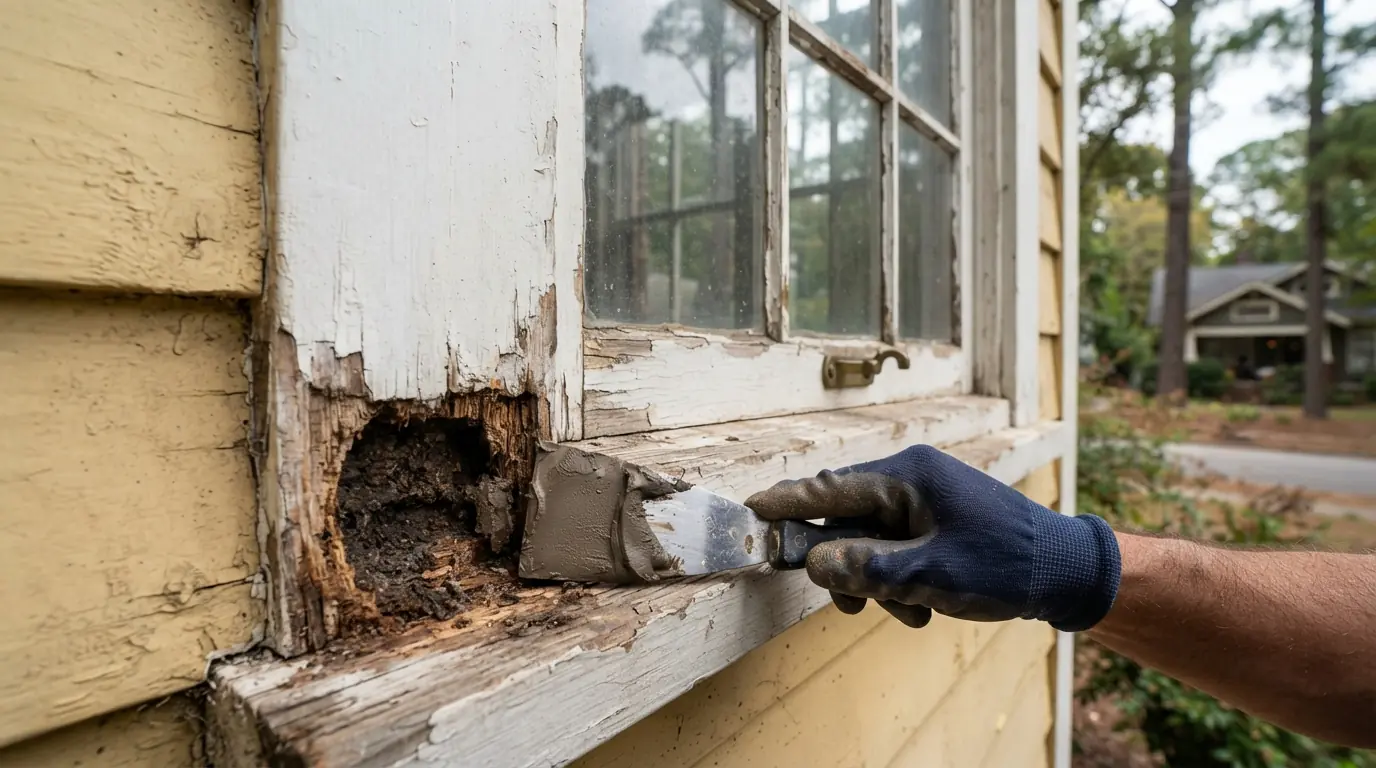
Rot starts where water sits and paint has failed: the bottom of a door jamb, the outer edge of a window sill, the base of a porch column. By the time paint peels, the damage underneath is usually bigger than it looks.
Small areas are dug out and filled with a two-part epoxy wood filler; anything larger is cut out and replaced with primed, rot-resistant stock in the same profile, then caulked and painted.
Warning signs
Signs of wood rot
- Screwdriver sinks in
Soft, spongy wood that gives under pressure.
- Paint peeling in one spot
Moisture lifting the finish from rotting wood.
- Dark or crumbling end grain
Water soaking into the ends of boards.
- Gaps at sill corners
Joints opening as the wood breaks down.
- Mushroom growth or mold
Advanced rot with fungus on the surface.
- Sagging porch column
Rot at the base losing strength.
- Door that sticks or drags
A swollen or rotting jamb out of square.
Step by step
How a rot repair runs
- 1
Probe
Every suspect area tested with an awl to find the full extent.
- 2
Remove
Rotted wood cut back until only sound wood remains.
- 3
Rebuild or replace
Epoxy for small areas, new primed wood for larger ones.
- 4
Seal
Joints caulked and water paths corrected where possible.
- 5
Paint
Primed and painted to match the rest of the house.
What we handle
Rot we repair
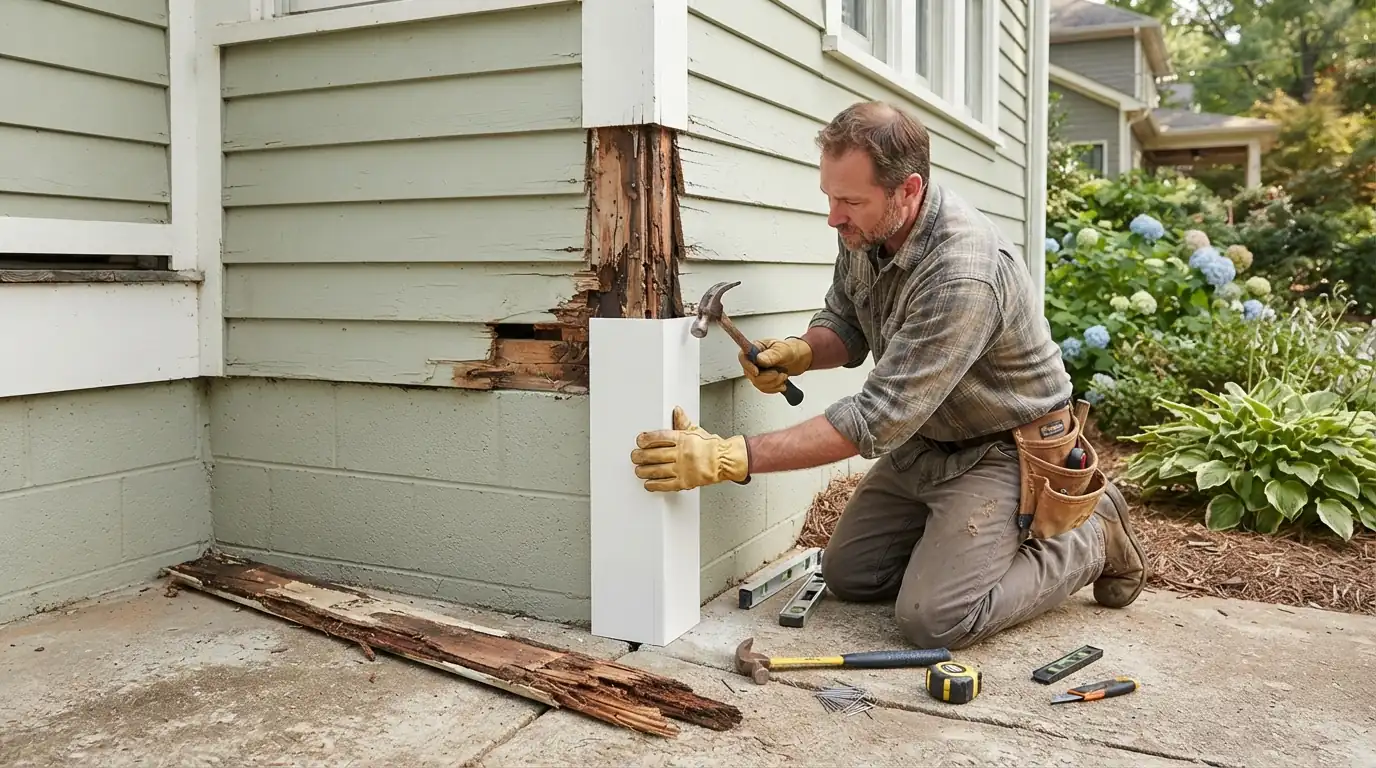
Rotted trim and corner board replacement
Window and door casings, corner boards and skirt boards rot from their bottom ends up, because that's where rain runs and collects. We remove the damaged piece or cut out the rotted length, check the sheathing and framing behind it, and install new trim in the same profile. Every cut end is primed before installation, joints are caulked, and the new trim is painted to match. Where boards sit too close to soil or a roof, we adjust the clearance so the new piece lasts.
Window sill and frame repair
Sills take rain and sun every day, and a small crack in the paint lets water into the end grain. Shallow rot is dug out, treated with a consolidant and rebuilt with epoxy filler that we shape to the original profile and sand smooth. Deep rot means the sill or a section of the frame is replaced. We check the sash and glazing putty at the same time, since failing putty is often how water reached the sill in the first place.
Door jamb rot repair
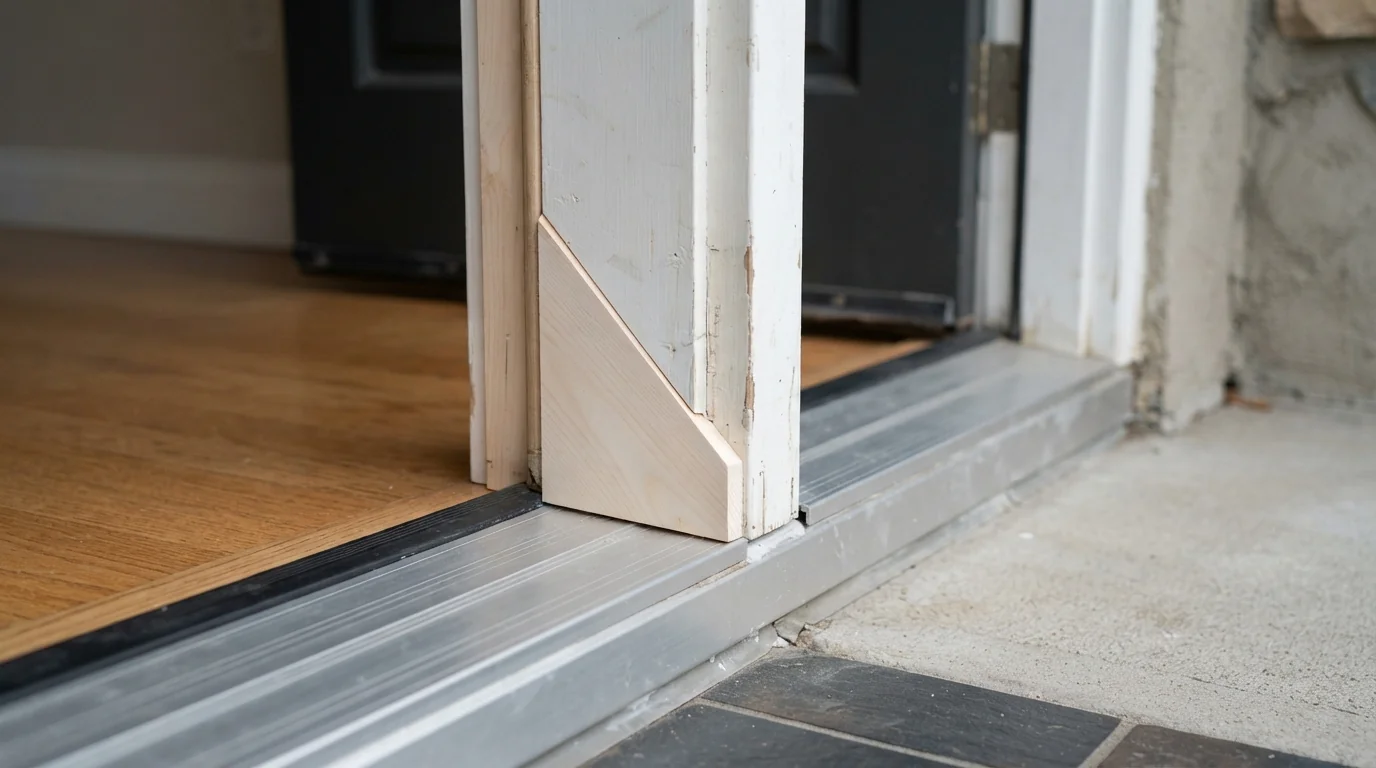
Exterior door jambs rot at the bottom where splashback and wet mats keep them damp. Rather than replacing the whole door frame, we cut out the rotted section and splice in new wood, often a rot-resistant composite, glued and fastened so the joint stays tight. The threshold and weatherstripping are checked while it's apart. Once the splice is filled, caulked and painted, it's hard to find, and the door closes the way it should. A door sweep or threshold adjustment often finishes the job.
Column and post rot repair
Porch columns and posts rot at the base, where water sits on the plinth or wicks up from the porch floor. Hollow wood columns can hide serious rot inside, and a load-bearing post that's badly rotted needs to be supported before it's repaired. We replace rotted bases and plinths, add a vented base or spacer so the column can dry, and rebuild or replace posts as needed. Everything is primed and painted to match the porch. Column caps are checked for gaps that let water in from above.
Around Atlanta
Where rot starts on Atlanta houses
Painters around Atlanta see new paint peel within a year when soft wood was simply coated over, because the rot underneath keeps growing and pushes the finish off. It tends to start in predictable places. Georgia's humidity keeps shaded north walls damp enough for mildew and rot, while south and west walls go through hard sun cycles that crack the paint film first and let water into the end grain.
Your options
Epoxy, splice or full replacement
Three ways to fix rotted wood, and when each one fits.
| Method | Fits | Result |
|---|---|---|
| Epoxy consolidant and filler | Small, shallow rot | Rebuilt in place, sanded to profile |
| Splice (dutchman) repair | Rot at one end of a long piece | New section joined to sound wood |
| Full replacement | Deep or widespread rot | New primed piece in matching profile |
What moves the price
What moves the price of rot repair
- Extent of the rot
A filled sill corner costs far less than a replaced sill.
- Epoxy or replacement
Epoxy suits small areas; bigger damage means new wood.
- Profile matching
Custom or old profiles may need milling or stacked moldings.
- Structural parts
Load-bearing posts need temporary support during repair.
- Hidden damage
Rot in sheathing or framing behind trim adds carpentry.
- Painting to match
New wood is primed and painted with the surrounding area.
Questions
Wood rot repair questions
No. Rot keeps spreading under paint, and the paint peels off within a season or two.
For small, contained areas, yes. Larger rot is better replaced.
We probe with an awl; soft wood gives way, sound wood doesn't.
We repair sills, frames and jambs. Full window or door replacement is a different job.
It can be if it carries load. We support it before repairing.
Also in Repair & Restoration
Related work from the same crews
- Fiber cement siding replacement
- Trim, Fascia and Soffit Repair
- Water Damage Ceiling and Wall Repair
- Caulking and Weatherproofing
- Wainscoting installation
Before you book, read checking sills and trim for rot.
Found soft wood? Get it looked at before it spreads
Tell us where the soft spots are, and we'll set up a visit to probe everything around them.
Call (470) 887-8741Answered 24/7 from 565 Tift St SW Ste b, Atlanta.
Where we start from