Fence and pergola staining
Fence, pergola and arbor staining around Atlanta
Bare wood outside in Georgia turns gray within a season and starts to split soon after. A cleaned, brightened and stained fence sheds water and holds its color for years instead.
Calls answered 24/7. Crews staged from the Atlanta service office.
- Answered 24/7
- Cleaned and brightened first
- Stain timed to dry weather
Quick answer
Fence staining in Atlanta works best between about 40 and 70 percent humidity, in the dry middle of the day after dew burns off. Summer humidity above 70 percent keeps stain from curing, and pine pollen from mid-March to early April sticks to wet finish. We clean and brighten the wood first, then stain in a dry weather window.
Updated September 2026
The job
What fence staining involves
Stain soaks into wood and protects it from water and sun, but only when the wood is clean and open. Gray fibers, mildew and old flaking finish all block it, so prep takes as long as the staining itself.
We clean, use a brightener such as Wolman's to restore the grain, and apply a penetrating stain such as Cabot or Ready Seal by sprayer and back-brush so it soaks into every board face and edge.
What is included
What a fence staining visit includes
- Cleaning of dirt, algae and mildew
- Wood brightener to restore the grain
- Drying time before any stain goes on
- Covering of plants, patios and siding
- Penetrating stain sprayed and back-brushed
- End grain and post tops coated
- Cleanup and a final walk along the fence
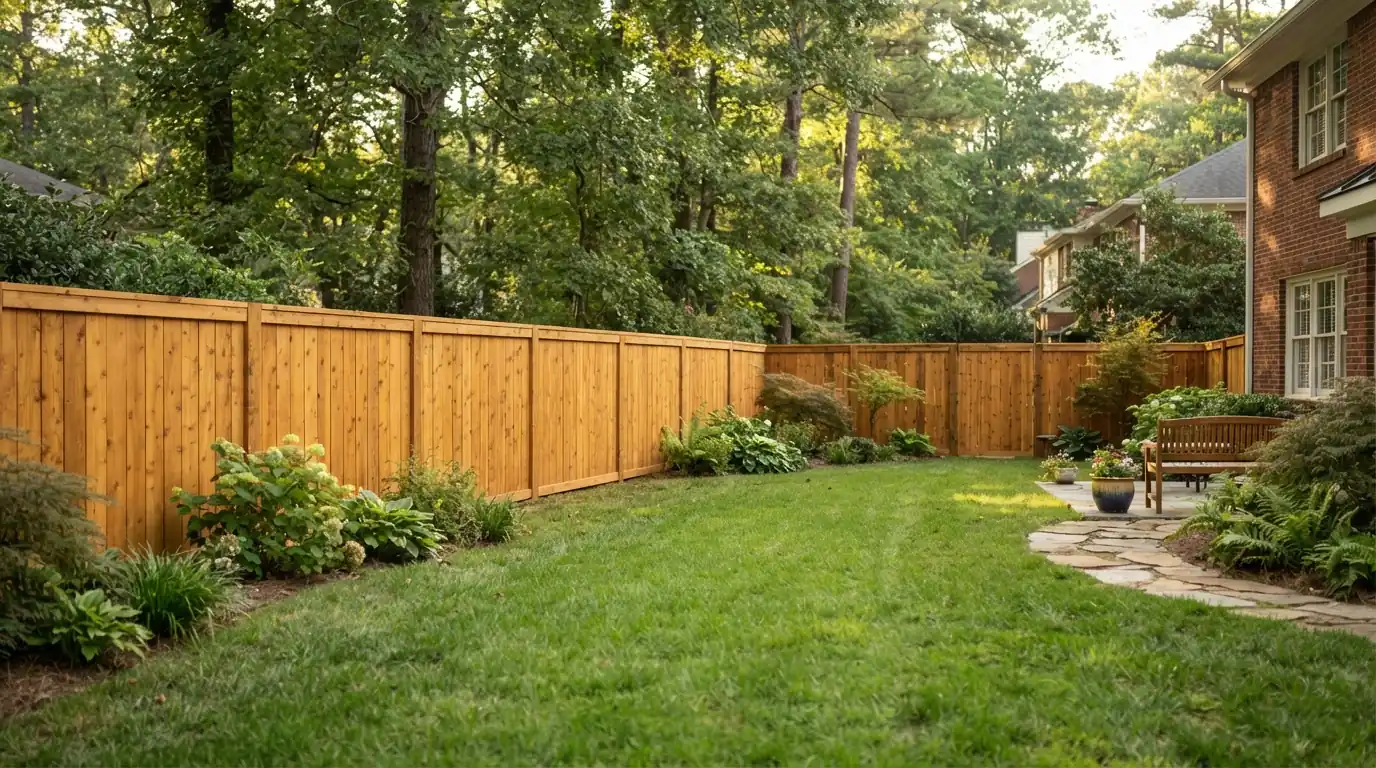
Around Atlanta
Atlanta weather decides the staining calendar
Atlanta's summer humidity regularly tops 70 percent, and stain applied into that air stays tacky instead of curing. So we plan fence work for days when the forecast sits between about 40 and 70 percent and start after the morning dew has burned off. Spring has its own window problem: from mid-March to early April pine pollen coats everything outside, and stain rolled or sprayed onto it traps a yellow film in the finish.
What we handle
Outdoor wood we stain and seal
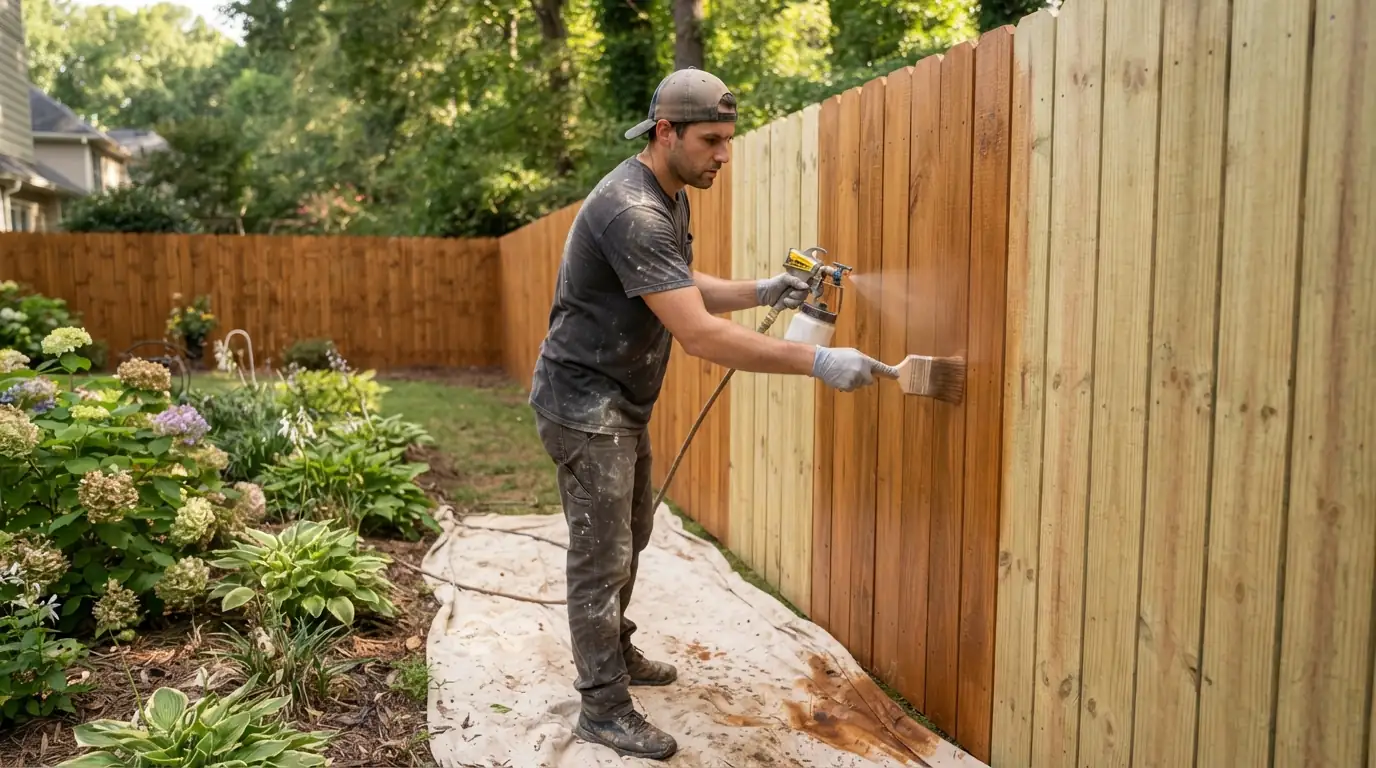
Wood fence staining
Pine and cedar privacy fences are the bulk of this work. We wash off dirt and mildew, let the boards dry, and brighten them so the stain takes evenly. A semi-transparent stain shows the grain and is easy to refresh later; a solid stain hides mismatched or weathered boards but builds up over time. We cover both sides when you have access to the neighbor's side, since a fence stained on one face only still takes water from the other and cups.
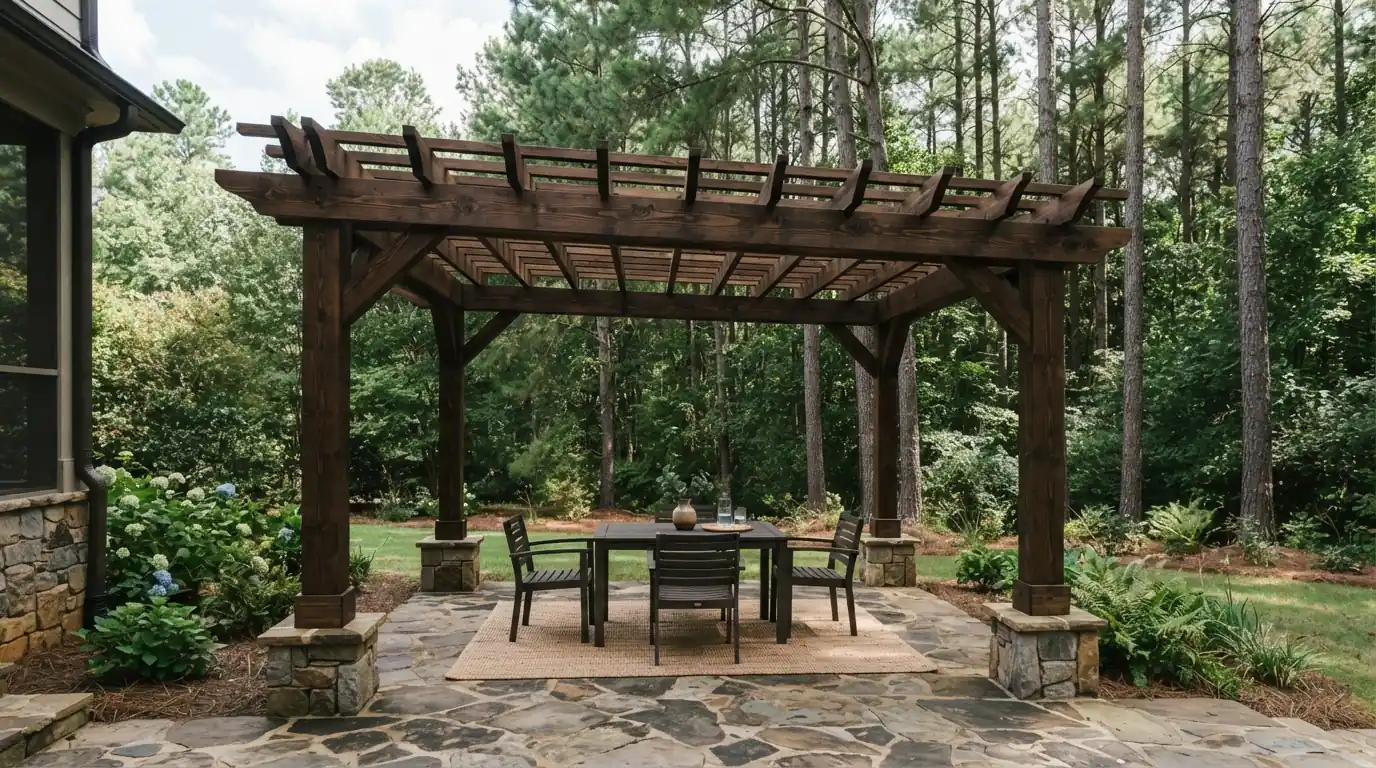
Pergola and arbor staining
Pergolas and arbors are harder than fences because every surface faces the weather: rafters, beams and posts all take sun and rain from above. Staining them means ladder work, careful masking of patio furniture and plants below, and extra attention to the tops of beams, where water sits longest. Where joints have opened or rafter tails have started to rot, we point it out before staining, because a coat won't hold on soft wood and the repair is easier before the finish goes on.
Fence painting
Some owners want a painted fence instead of a stained one, usually to match trim or to cover a fence with mixed old and new boards. Paint gives an even color but forms a film that can peel as the wood moves with Georgia's humidity swings, so the prep has to be thorough: clean, dry wood, an exterior primer on bare boards and two coats of exterior acrylic. Once a fence is painted, going back to stain means stripping, so it's worth deciding carefully before we start.
Privacy fence sealing
A clear or lightly tinted water-repellent sealer is the minimum protection for a new fence. It keeps rain from soaking in and slows graying without changing the wood's color much. New pressure-treated pine needs to dry out before any sealer or stain will soak in, often a few months after installation, so we'll tell you when your fence is ready rather than coat it too early. Sealers wear faster than stain and need renewing more often, which is the tradeoff for keeping the natural look.
Step by step
How a fence staining job runs
- 1
Look and plan
We check the wood, pick stain or sealer, and book a dry weather window.
- 2
Clean and brighten
Dirt and mildew washed off, brightener applied, boards left to dry.
- 3
Protect
Plants, patios, siding and the ground along the fence covered.
- 4
Stain
Sprayed and back-brushed so it soaks into faces, edges and end grain.
- 5
Check and clean up
Missed spots touched up and the area cleaned before we leave.
Do it yourself or call
Staining it yourself vs having it done
Fence staining is a common weekend project. Here is where it usually goes wrong.
| Step | Common DIY result | What we do |
|---|---|---|
| Cleaning | Pressure washer furs and gouges soft wood | Low pressure, cleaner and brightener |
| Timing | Stain goes on a humid or pollen-heavy day | Dry weather window only |
| Application | Spray only, stain sits on top | Spray and back-brush into the grain |
Coatings and materials we work with
What moves the price
What moves the price of fence staining
- Linear footage and height
A six-foot privacy fence has far more surface than a picket fence.
- One side or both
Staining both faces nearly doubles the work but protects the boards.
- Condition of the wood
Heavy mildew, gray fibers or old peeling finish add prep time.
- Stain or paint
Paint needs primer on bare wood and more coats than stain.
- Access and landscaping
Tight beds, vines and slopes slow masking and spraying.
- Pergola detail
Rafters, lattice and beams take ladder and brush work.
Questions
Fence staining questions
New pressure-treated pine usually needs a few months to dry. Cedar can take stain sooner. We test the wood before starting.
Semi-transparent shows the grain and refreshes easily. Solid hides mismatched boards but builds up and eventually needs stripping.
When we can reach the other side, yes. One-sided staining leaves the back face absorbing water.
Most stains need a dry day to set. We schedule around the forecast and won't start if rain is due.
Not until it's cleaned. Mildew under stain keeps growing and shows through.
Also in Exterior Painting
Related work from the same crews
- Front door painting
- Pre-paint wash and prep
- Metal railing and wrought iron painting in Atlanta
- Cedar siding and shake staining in Atlanta
- Metal roof painting in Atlanta
Before you book, read stain or paint a deck.
Book the fence before the next gray season
Tell us the length, the height and whether a pergola is involved, and we'll set up a look.
Call (470) 887-8741Answered 24/7 from 565 Tift St SW Ste b, Atlanta.
Where we start from