Epoxy and concrete floor coating
Epoxy garage and concrete floor coating in Atlanta
A coated garage floor cleans with a mop, hides nothing ugly and stops concrete dust. The coating only lasts if the concrete is ground open and dry first, which is where store-bought kits fail.
Calls answered 24/7. Crews staged from the Atlanta service office.
- Answered 24/7
- Concrete ground, not just etched
- Moisture tested first
Quick answer
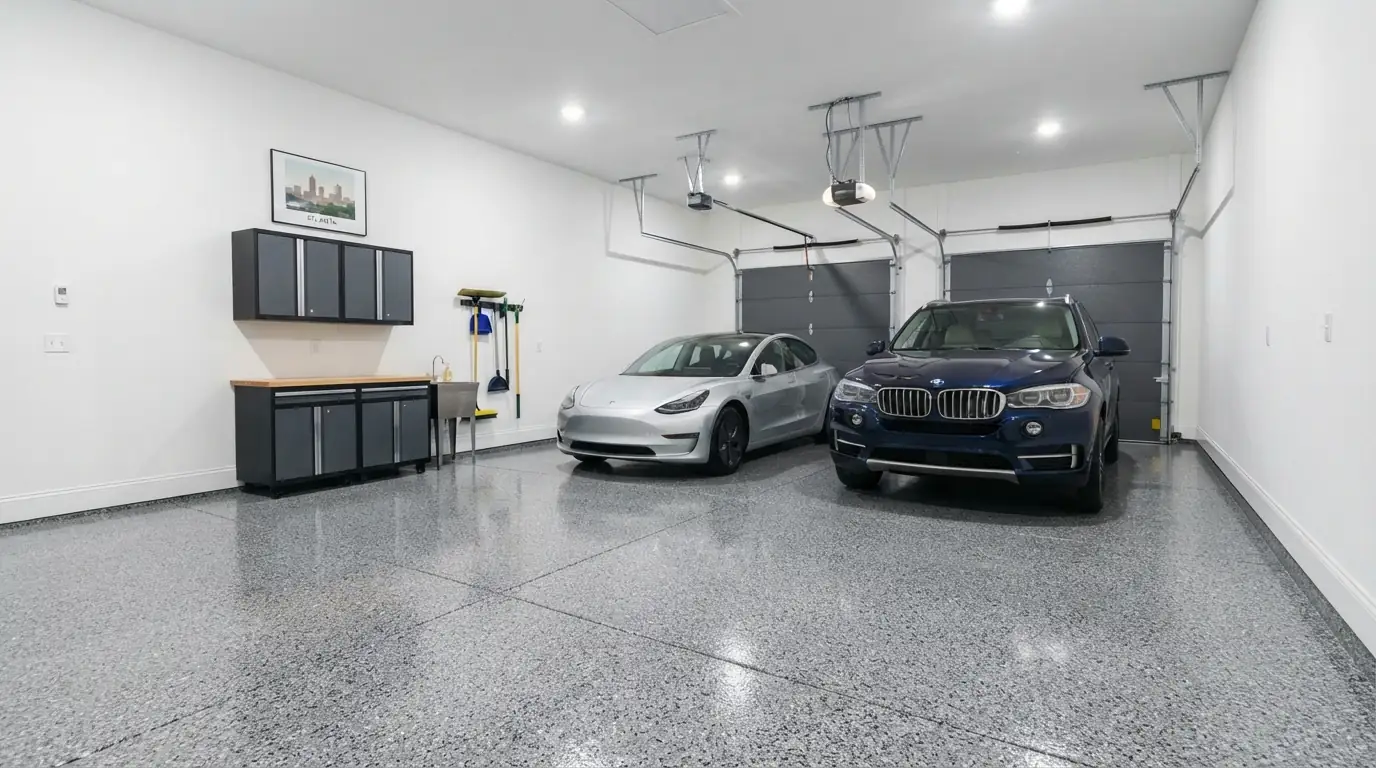
Epoxy garage floor coating in Atlanta holds up when the concrete is mechanically ground to open its surface, cracks are filled and moisture is tested before coating. We apply a two-part epoxy base, optional decorative flake and a clear topcoat, which resist hot-tire pickup, oil and red clay staining far better than bare or painted concrete.
Updated September 2026
The job
What makes a floor coating last
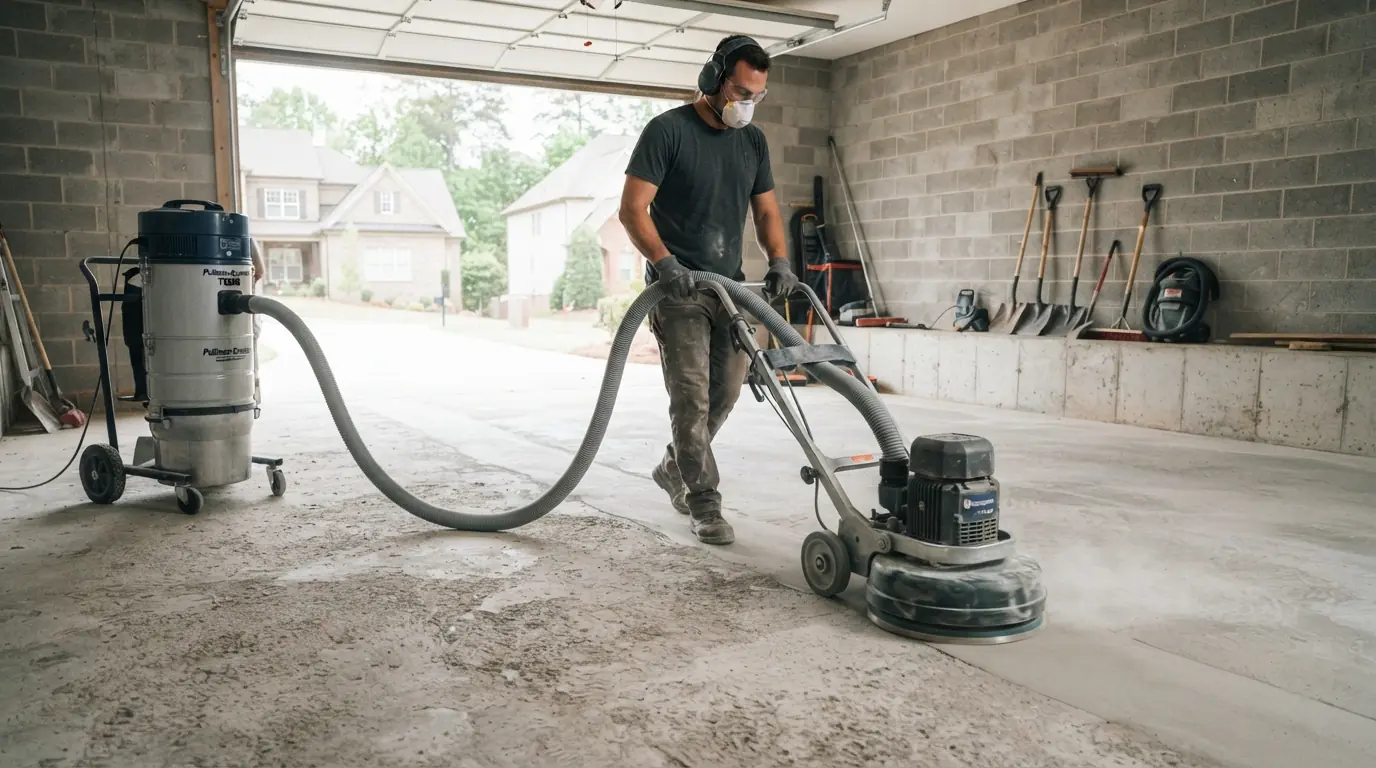
Epoxy bonds to open, clean, dry concrete. Acid etching from a kit leaves a weak surface; grinding removes the top layer, old sealers and stains so the coating bites into sound concrete.
Cracks and spalls are filled with a repair compound such as Quikrete or a Sika product, and systems from makers like Sherwin-Williams ArmorSeal or Rust-Oleum are applied at the thickness they specify.
What moves the price
What moves the price of floor coating
- Floor area
Square footage sets material and labor.
- Concrete condition
Cracks, spalls and old sealers add grinding and repair.
- System type
Solid color, flake and metallic systems differ in cost.
- Moisture
High moisture needs a special primer or other fixes.
- Topcoat
Extra clear coats add durability and cost.
- Stem walls and steps
Coating up walls and on steps adds detail work.
What we handle
Floor coatings we apply
Epoxy garage floor
A solid-color epoxy floor is the practical choice for most garages. The concrete is ground, vacuumed and patched, then a two-part epoxy base coat is rolled on at full thickness and finished with a clear topcoat that resists abrasion and hot-tire pickup. It seals out oil and road grime and makes the floor easy to sweep and mop. We coat the floor up the base of the walls a few inches so spills don't soak in at the edges.
Flake and metallic epoxy
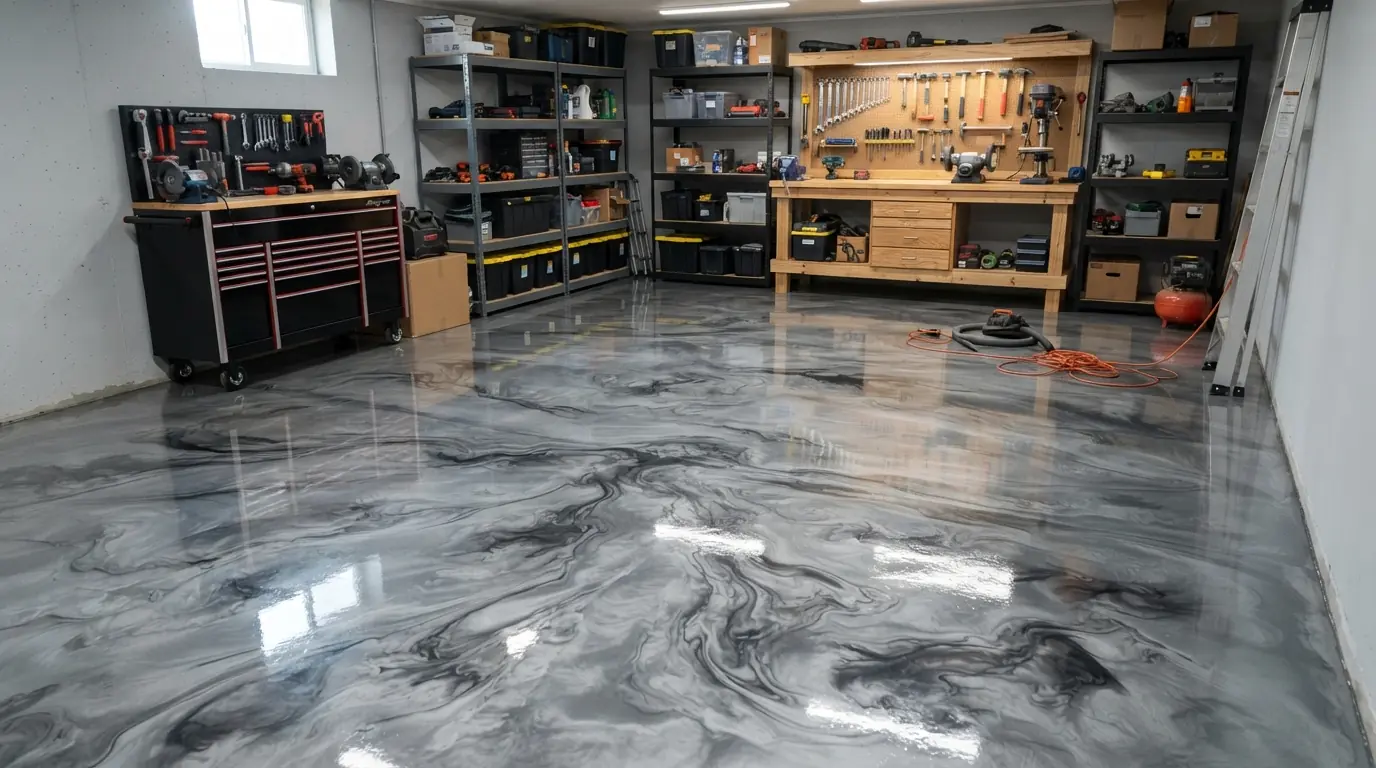
Decorative systems add vinyl color flakes broadcast into the wet base coat, or metallic pigments worked into the epoxy for a marbled, liquid look. Flake floors hide dust and small imperfections well and add grip; metallic floors are striking in shops, basements and showrooms but show scratches more. Both are sealed with a clear topcoat. We show you sample boards of flake blends and metallic colors in the space's own light before you choose one. The flake density can be adjusted, from a light scatter to full coverage.
Basement floor coating
Basement slabs sit against the soil and often carry moisture up through the concrete, which pushes coatings off from underneath. We test for moisture before recommending anything; if levels are high, a moisture-tolerant primer or a breathable coating is used, or we'll tell you the slab needs water management first. On dry slabs, epoxy makes a finished basement easier to clean and brighter, and it suits workshops, gyms and laundry areas. Floor drains and sump covers are masked and left working.
Porch and patio floor paint
Concrete porches and patios take sun, rain and foot traffic, and epoxy can yellow and get slippery outdoors. For these, we clean and etch or grind the surface and apply a porch-and-floor coating made for exterior concrete, with anti-slip additive where people walk wet. Wood porch floors get a porch enamel instead. Colors are chosen to stay cool underfoot in summer, since dark coatings on sunny concrete get very hot. Expansion joints are cleaned out and left open.
Your options
Epoxy, concrete paint or porch coating
Three ways to coat concrete, and where each one belongs.
| Coating | Durability | Hot tire resistance | Best for |
|---|---|---|---|
| Two-part epoxy system | High | Good with topcoat | Garages, shops, basements |
| One-part concrete paint | Low | Poor | Light-use floors, quick refresh |
| Porch and floor coating | Moderate | Not for vehicles | Porches, patios, walkways |
Around Atlanta
Red clay and Atlanta garage floors
Georgia red clay doesn't stay in the yard. Heavy rain splashes it onto driveways and foundation walls, tires and shoes carry it into the garage, and its iron-rich particles bond to porous surfaces like bare concrete, leaving orange stains that scrubbing won't lift. A sealed epoxy floor gives the clay nothing to soak into, so it wipes off. It's one of the main reasons Atlanta owners call us about coating a garage.
Coatings and materials we work with
Do it yourself or call
Kit from the store vs a crew
Garage epoxy kits are popular and often peel within a year. Here is why.
| Step | Common DIY result | What we do |
|---|---|---|
| Surface prep | Acid etch only, weak bond | Diamond grinding to open concrete |
| Moisture | Not tested, coating lifts | Moisture tested before coating |
| Thickness | Thin one-part product | Full two-part system with topcoat |
Step by step
How a floor coating job runs
- 1
Test and plan
Moisture and old coatings tested; system and color chosen.
- 2
Grind
Concrete ground open, edges hand ground, dust vacuumed.
- 3
Repair
Cracks and spalls filled and ground flush.
- 4
Coat
Epoxy base, flake or metallic if chosen, then clear topcoat.
- 5
Cure
Foot traffic and vehicle return timed to the product cure.
Questions
Epoxy floor questions
Usually the concrete was only etched, not ground, or was damp. Hot tires then pull the coating off.
It depends on the product and temperature; we tell you the exact wait for your system.
Smooth floors can be when wet. Flake or an anti-slip additive in the topcoat adds grip.
Yes. Cracks are filled and ground flush first; large structural cracks may show through.
Some epoxies amber in sunlight. A UV-stable topcoat helps where sunlight reaches the floor.
Also in Commercial & Specialty
Related work from the same crews
Before you book, read what a good painting quote lists.
Turn the garage floor into something you can mop
Tell us the size of the garage or floor, and we'll set up a visit to test the concrete.
Call (470) 887-8741Answered 24/7 from 565 Tift St SW Ste b, Atlanta.
Where we start from