Plaster repair
Plaster wall and ceiling repair for older Atlanta homes
Plaster outlasts drywall when it is cared for, and it cracks, loosens and sags when it isn't. We stabilize what's there before patching, so the repair doesn't open up again next winter.
Calls answered 24/7. Crews staged from the Atlanta service office.
- Answered 24/7
- Plaster kept where it's sound
- Lead-safe prep in pre-1978 homes
Quick answer
Plaster repair in older Atlanta homes usually means reattaching loose plaster to the lath, filling cracks with a setting compound and skim coating so the wall paints evenly. Houses built before 1978 may have lead paint on that plaster, so sanding is handled as lead-safe work. Most walls can be saved; replacement with drywall is the exception, not the default.
Updated September 2026
The job
Why we repair plaster instead of tearing it out
Original plaster is dense, quiet and fire resistant, and in a historic house it is part of what the walls are supposed to look like. Tearing it out creates dust, disturbs old paint and costs more than most owners expect.
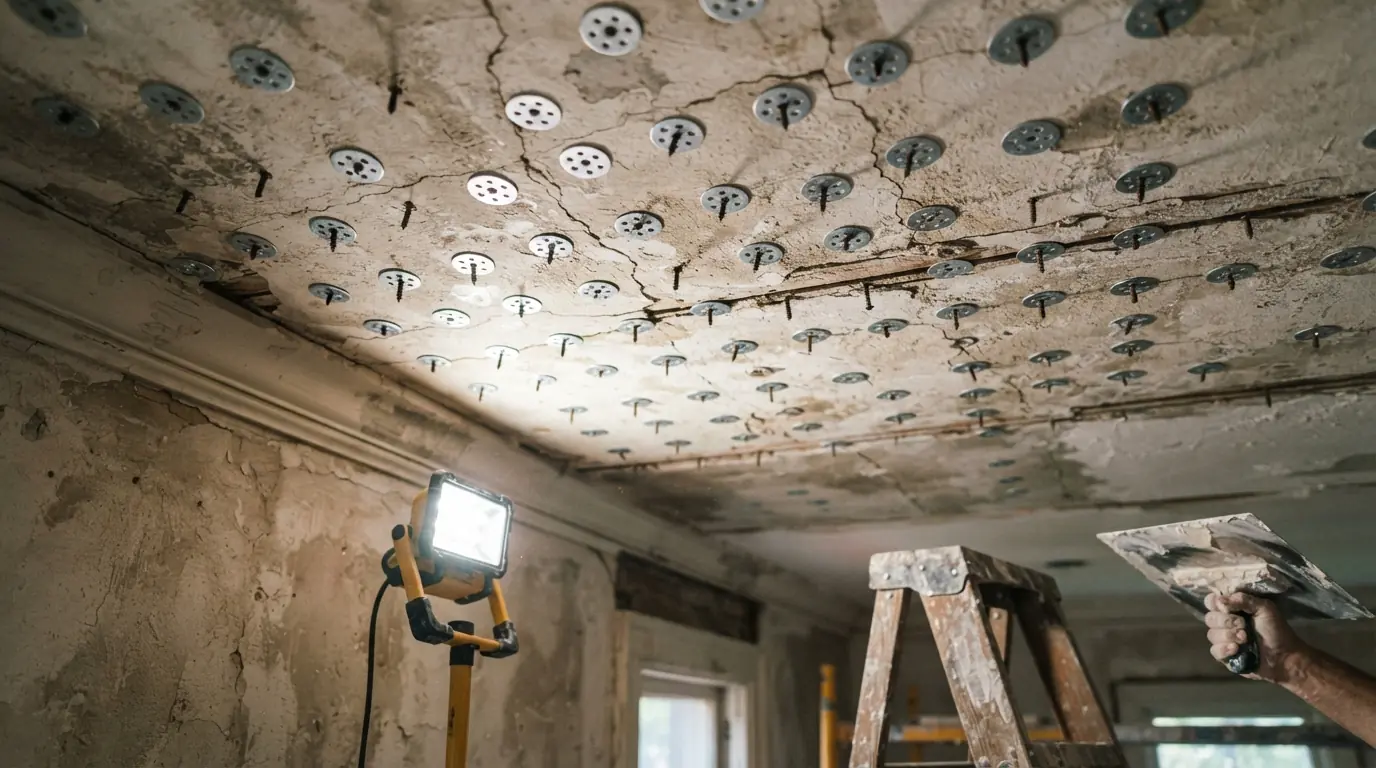
So we start by testing how firmly the plaster holds to the lath. Sound plaster with cracks is patched; loose plaster is pinned back with plaster washers and adhesive before any finish coat.
What moves the price
What moves the price of plaster repair
- Crack or loose plaster
Filling cracks is quicker than reattaching loose sections.
- Wall or ceiling
Overhead work is slower and needs more support and staging.
- Area affected
A few patches cost less than skim coating an entire room.
- Lead-safe setup
Pre-1978 paint adds containment and cleanup time.
- Water damage
A leak behind the plaster is traced and fixed first.
- Painting after
Most repairs end with primer and paint over the whole wall.
What we handle
Plaster problems we fix
Plaster crack repair
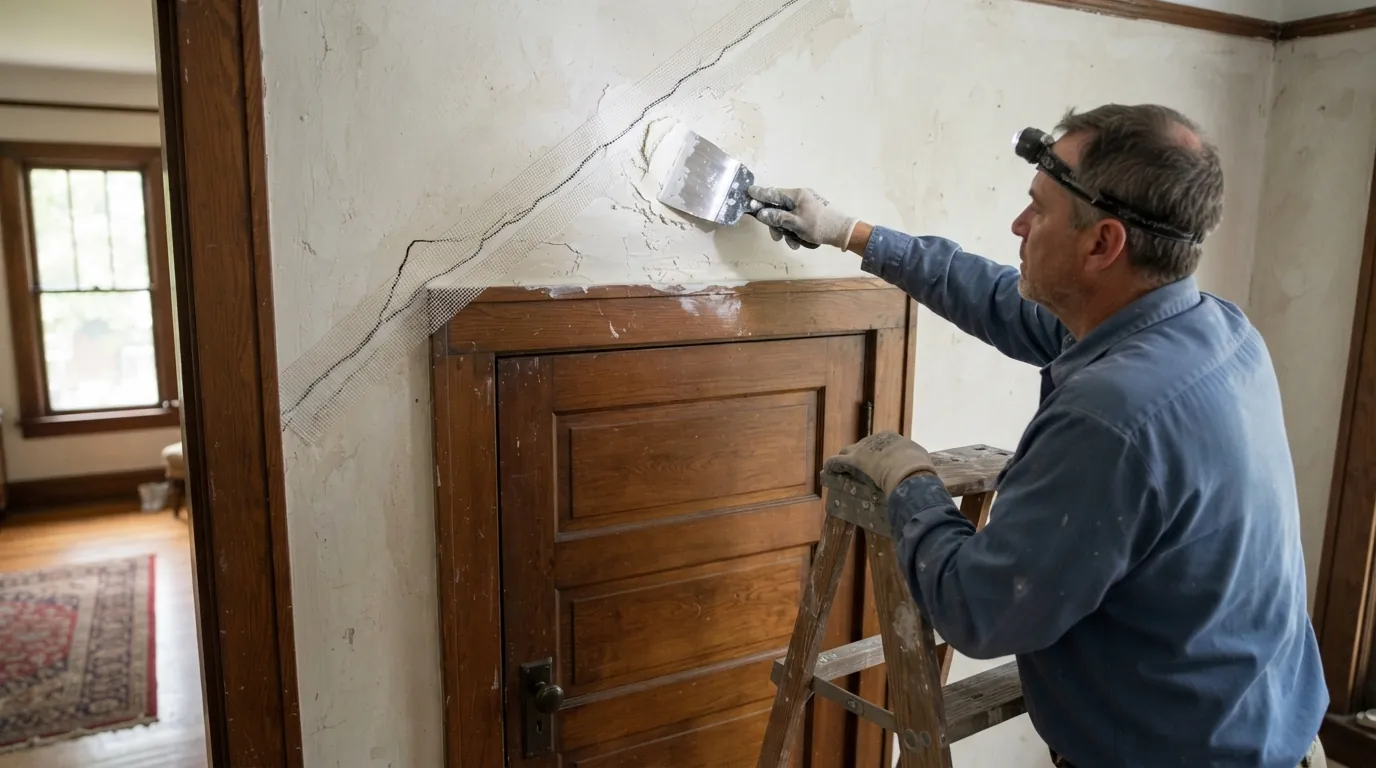
Hairline and diagonal cracks over doors and windows are the most common plaster problem, and most come from seasonal movement rather than a failing wall. We open the crack slightly, fill it with a setting-type compound rather than premixed spackle, bridge wider cracks with mesh tape and feather the patch so it disappears under paint. Premixed spackle shrinks and cracks again within a season, which is why so many old walls show the same crack repaired three times. Once dry, the patch is primed before paint.
Loose plaster reattachment
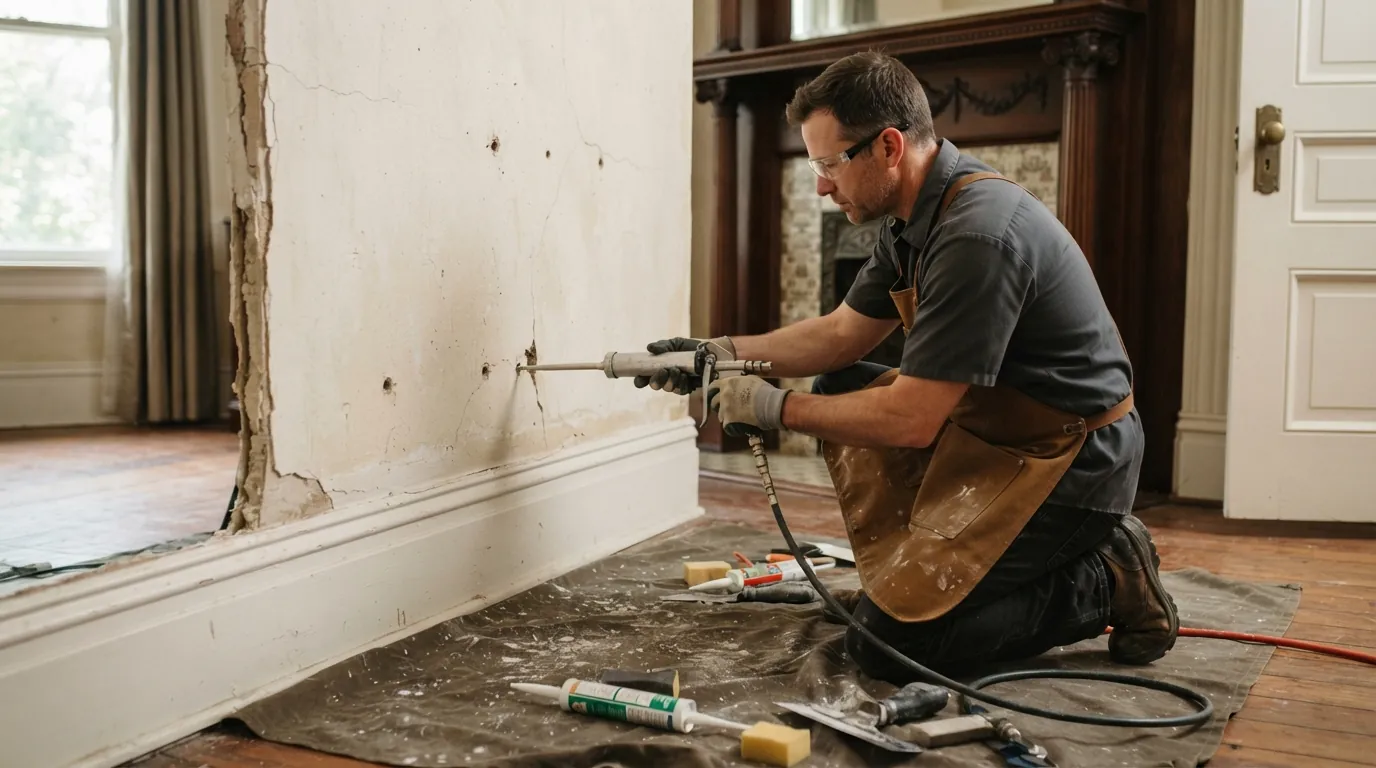
When plaster moves if you press on it, or sounds hollow when tapped, its keys to the lath have broken. Left alone it bulges and eventually falls. We inject adhesive behind the loose section and pull it back tight with plaster washers screwed into the lath, then skim over the washers once the adhesive cures. This keeps the original wall and avoids the dust and disruption of tearing plaster out room by room. Any water source behind the bulge is found first, or it simply loosens again.
Plaster ceiling repair
Ceilings are where loose plaster becomes dangerous, because gravity is working on it all the time. A sagging or cracked ceiling, especially under a bathroom or an attic that has leaked, gets checked before anything else. Sound areas are pinned and patched in place. Where a section has let go of the lath entirely, we remove it safely, fill with drywall set flush, and skim the whole plane so the ceiling reads as one surface. Leaks above are traced and stopped before the patch goes in.
Skim coating over plaster
Walls with years of patches, peeling paint layers or rough old texture often need a full skim coat rather than spot repair. A thin layer of compound is troweled over the whole surface, sanded and primed, which gives a smooth, even finish that takes paint uniformly. It is also the step that hides the edges of every earlier repair. On walls with old lead paint, the prep before skimming is done with lead-safe containment and cleanup. The result paints like new drywall.
Your options
Repair the plaster or replace it
Two ways to deal with damaged plaster, and what each one means for the house.
| Repair and skim | Tear out and drywall | |
|---|---|---|
| Dust and mess | Contained, limited | Heavy, whole room |
| Original character | Kept | Lost |
| Lead paint disturbance | Limited to prep | Extensive |
| When it fits | Most cracked or loose walls | Sections that have failed entirely |
Around Atlanta
Plaster in Atlanta's streetcar-era neighborhoods
Inman Park was laid out in the late 1880s as Atlanta's first streetcar suburb, and Kirkwood followed in the 1890s, so many houses there still carry their original plaster over wood lath. After more than a century of seasonal movement the keys behind that plaster break, and ceilings are where it shows first. Because these homes predate 1978, we assume old paint may contain lead and set up for lead-safe sanding.
Step by step
How a plaster repair runs
- 1
Test the wall
We tap and press to map loose areas and note every crack.
- 2
Contain
Floors and furniture covered; lead-safe setup in older homes.
- 3
Stabilize
Loose plaster reattached with adhesive and plaster washers.
- 4
Fill and skim
Cracks taped and filled, then skimmed flat and sanded.
- 5
Prime and paint
Repairs primed so they don't flash, then painted.
Warning signs
Signs your plaster needs attention
- Cracks that keep reopening
The same crack returns after every repair.
- Hollow sound when tapped
The plaster has let go of the lath behind it.
- Bulging or bowed areas
Loose plaster is pulling away from the wall.
- Sagging ceiling
The most urgent sign; keep people out from under it.
- Crumbling at corners
Old plaster breaking down, often from moisture.
- Stains with cracking
Water getting in above or behind the plaster.
- Nail pops and flaking paint
Movement or moisture lifting the finish layer.
Questions
Plaster repair questions
Rarely. Most plaster can be reattached and patched for less, with less dust and disruption. We recommend replacement only where a section has failed completely.
Usually they were filled with premixed spackle, which shrinks. A setting compound with mesh tape holds far longer.
It can be. Keep people out from under it and call us; loose ceiling plaster is heavy.
The paint on it might, in homes built before 1978. That's why sanding there is done with lead-safe containment.
Yes. Smooth, sand-finish and light textures can be matched so the patch blends into the rest of the wall.
Also in Repair & Restoration
Related work from the same crews
- Popcorn scraping
- Rotted trim and corner board replacement
- Siding repair and replacement in Atlanta
- Trim, fascia and soffit repair in Atlanta
- Water damage ceiling and wall repair in Atlanta
Before you book, read painting an older home.
Cracks, bulges or a sagging ceiling? Start with a look
Tell us which rooms and what you're seeing, and we'll book a visit to test the walls.
Call (470) 887-8741Answered 24/7 from 565 Tift St SW Ste b, Atlanta.
Where we start from