Deck staining
Deck staining and sealing for Atlanta backyards
A deck takes more weather than any other wood on a house: sun on every board, rain sitting on flat surfaces, pollen and leaves in the gaps. Stain keeps it from graying, cupping and splintering, if the wood is clean enough to take it.
Calls answered 24/7. Crews staged from the Atlanta service office.
- Answered 24/7
- Stripped and brightened first
- Stain timed to dry weather
Quick answer
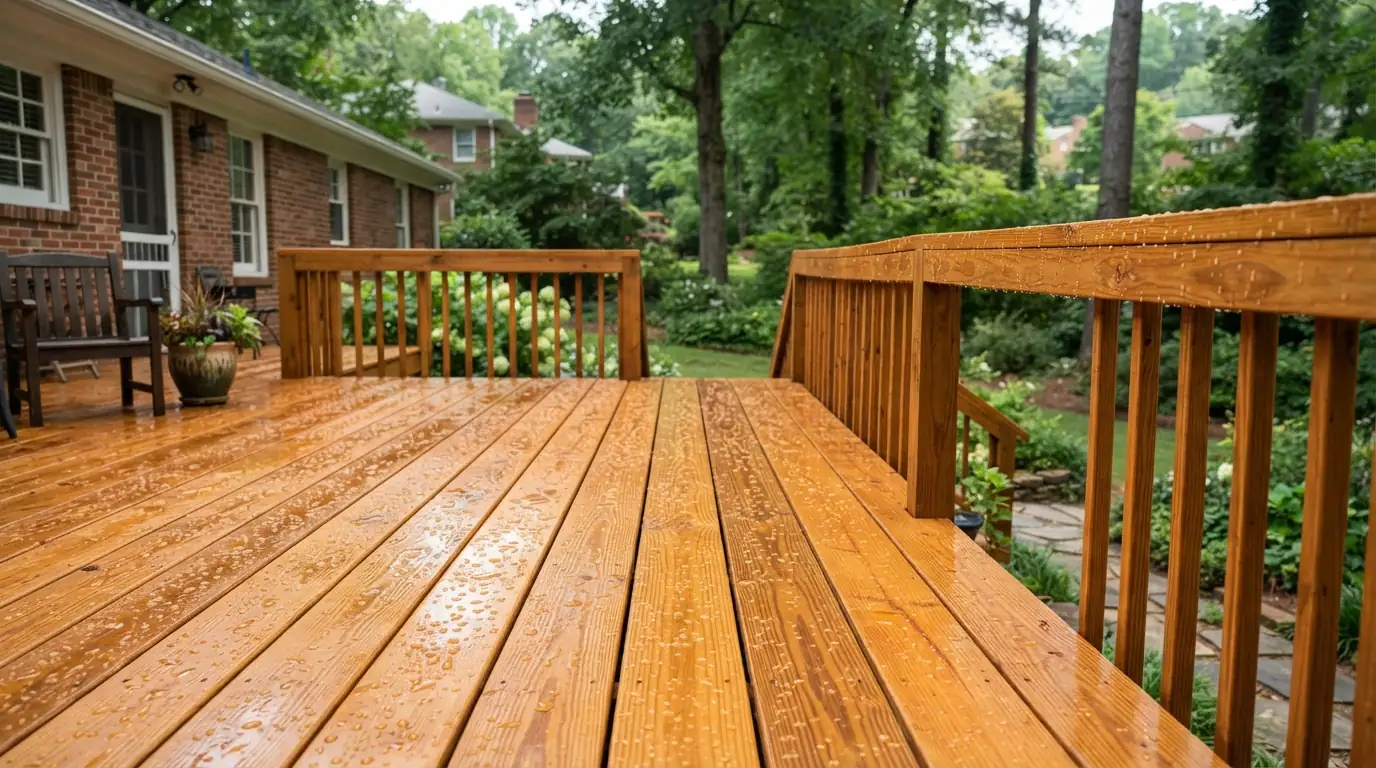
Deck staining in Atlanta costs about $522 to $1,187 for a typical professional job, and decks here need restaining and resealing every two to three years, according to Angi's Atlanta data. The result depends on prep: old finish stripped, wood cleaned and brightened, and stain applied only on dry days after the boards have dried out completely.
Updated September 2026
The job
Prep decides how long deck stain lasts
Old stain that's peeling has to come off, or new stain peels with it. Gray fibers and mildew need cleaning, and a brightener restores the wood's color and opens the grain.
We then apply penetrating stains from lines like Cabot, Armstrong-Clark or Defy, or Sherwin-Williams SuperDeck, with brushes worked into every board, rail and end.
Around Atlanta
Atlanta's pollen and the deck calendar
From mid-March to early April, pine pollen blankets every flat surface around Atlanta, and a deck collects more of it than any other part of the house. Stain applied over that film seals the dust in, and Atlanta painters see finishes fail within a year when wood wasn't properly cleaned first. So we plan deck work after pollen season, and every job starts with a wash that clears pollen, mildew and grime from the boards and gaps.
What we handle
Deck work we do
Deck stripping and cleaning
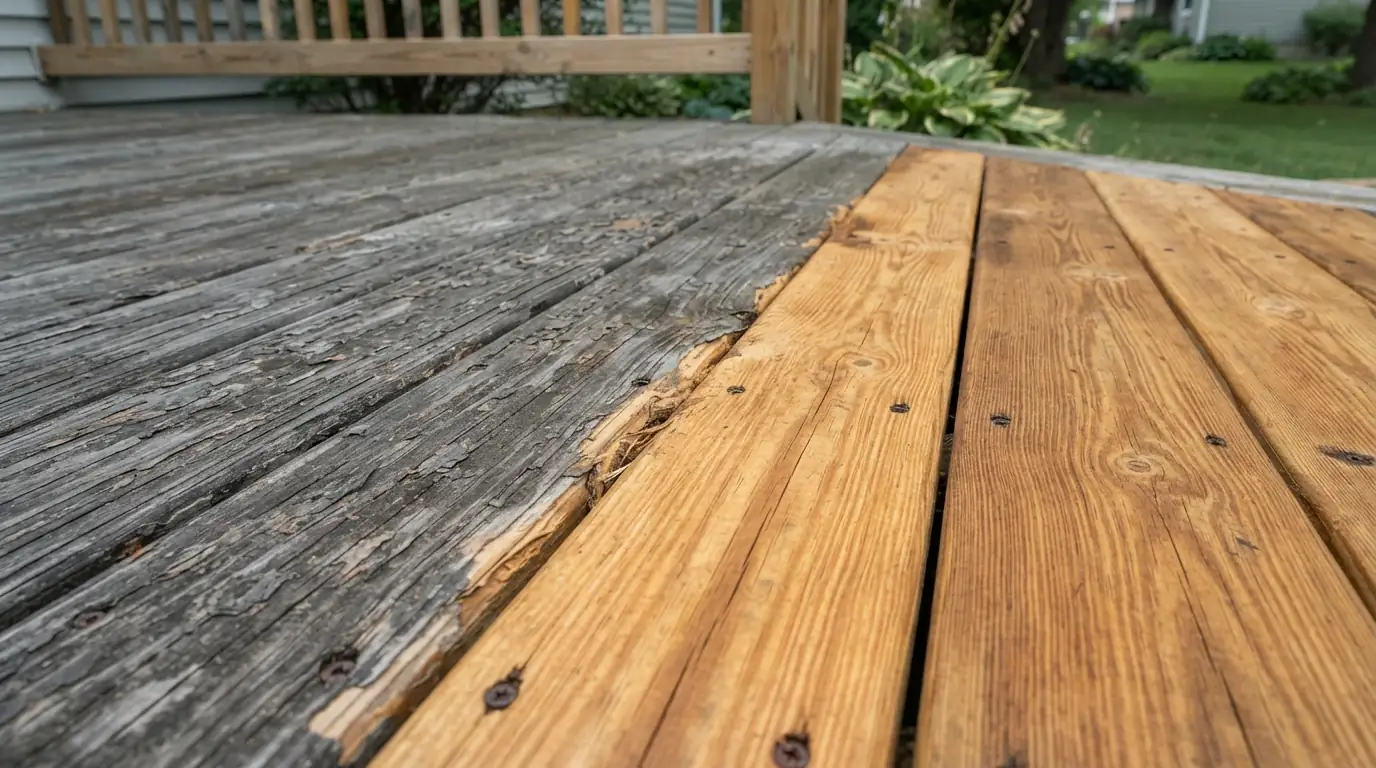
When old stain is peeling or a solid stain has worn through in traffic lanes, it has to be stripped before new stain will hold. We apply a stripper, scrub and rinse at low pressure, then neutralize and brighten the wood so the grain opens and the color evens out. Loose nails are reset and popped screws replaced while the deck is bare. The wood then has to dry for a few sunny days before any stain goes on. Stripping and staining are usually booked a few days apart for that reason.
Semi-transparent deck stain
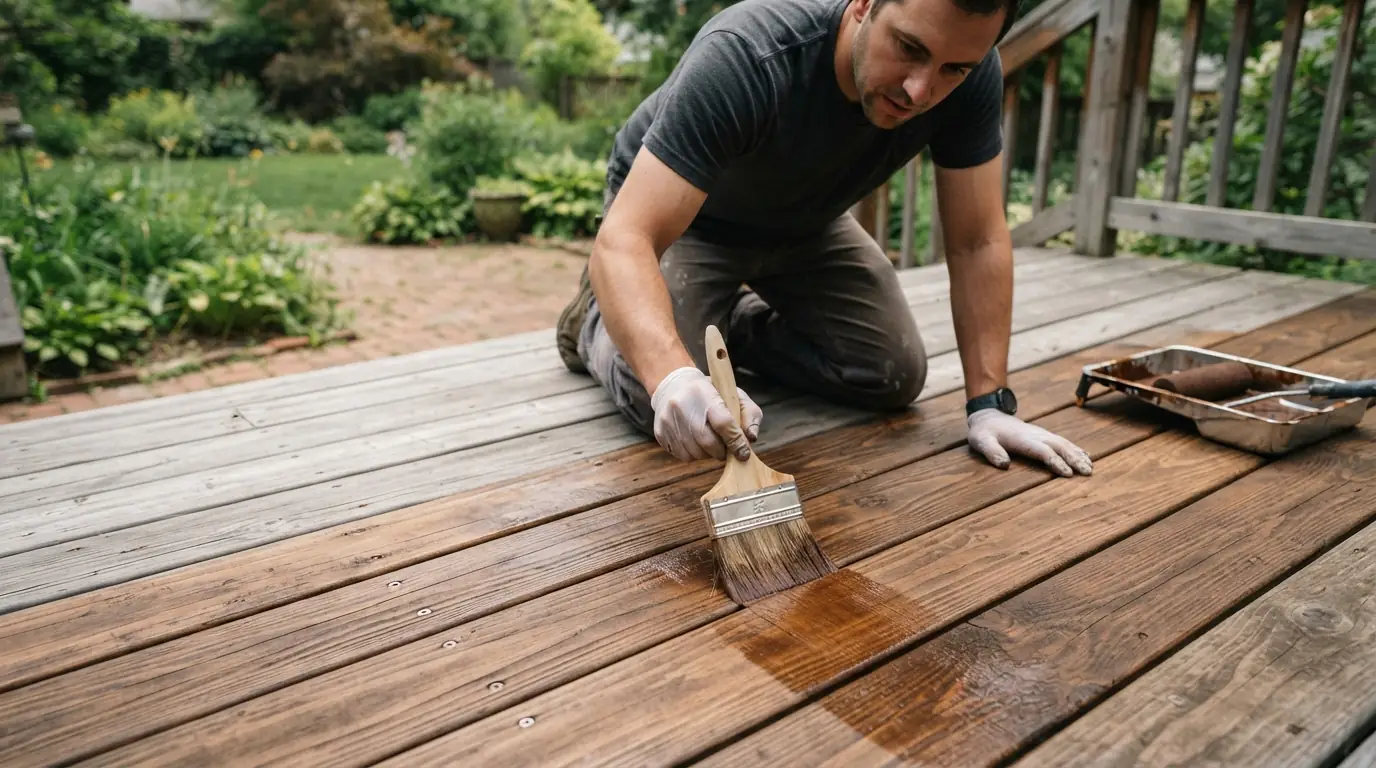
Semi-transparent stain soaks into the wood, adds color and shows the grain. It doesn't form a film, so it wears away gradually instead of peeling, and recoating is simple: clean and apply another coat. It's the finish we recommend most for decks in decent shape. Deck floors wear fastest, so they're often restained more often than rails. We back-brush every coat so stain gets into board edges and gaps, not just the tops. Board ends, which soak up the most water, get an extra pass.
Solid color deck stain
Solid stain hides the grain and evens out mismatched or weathered boards, much like paint. It suits older decks where some boards have been replaced or the wood is blotchy. The tradeoff is that solid stain forms a film that can peel in traffic areas, and once used, it's hard to go back to a semi-transparent look without stripping. Many owners choose solid stain on rails and semi-transparent on the floor for that reason. Stairs usually follow whichever finish the floor gets.
Deck sealing
A clear or lightly tinted water-repellent sealer protects new or freshly cleaned wood without changing its color much. It keeps water from soaking in and slows splitting and cupping, but it offers little UV protection, so wood still grays in full sun. New pressure-treated decks usually need to dry for several months before any sealer or stain will absorb, so we test the wood before sealing a new build. Sealers need renewing more often than stains, often every year on sunny decks.
Step by step
How a deck staining job runs
- 1
Inspect
Boards checked for rot and loose fasteners; finish chosen.
- 2
Strip and clean
Old finish stripped, wood cleaned and brightened.
- 3
Dry
The deck left to dry fully before any stain.
- 4
Stain
Applied and back-brushed on floors, rails and stairs.
- 5
Cure and review
Traffic kept off until dry; final walk with you.
Coatings and materials we work with
Your options
Semi-transparent, solid or clear
Three finishes for a deck and how each one ages.
| Finish | Look | How it wears | Recoat |
|---|---|---|---|
| Semi-transparent stain | Color with grain showing | Fades gradually | Clean and recoat |
| Solid stain | Opaque, hides grain | Can peel in traffic | Strip worn areas first |
| Clear sealer | Natural wood | Grays in sun | More often than stain |
What moves the price
What moves the price of deck staining
- Deck size
Square footage of floor plus rails, stairs and skirting.
- Stripping needed
Peeling old finish must be removed before new stain.
- Rails and balusters
Spindles and rails take far longer per foot than floors.
- Wood condition
Splintering or damaged boards need sanding or replacing.
- Stain type
Solid and semi-transparent stains differ in coats and material.
- Height and access
Second-story decks need ladders for rails and undersides.
Atlanta market range from a published local cost guide, not our price: $522 to $1,187 to stain a deck professionally in Atlanta; restain and reseal every two to three years.
Questions
Deck staining questions
About every two to three years, sooner on decks in full sun.
Over sound semi-transparent stain, yes, after cleaning. Peeling finish must be stripped first.
Light foot traffic is usually fine the next day; furniture can go back once the stain has cured.
Yes. Soft boards are replaced before staining so the new finish isn't wasted.
Usually too many coats, a solid stain in heavy traffic, or stain over dirty or damp wood.
Also in Exterior Painting
Related work from the same crews
- Fence, pergola and arbor staining in Atlanta
- Exterior doors, shutters and garage doors in Atlanta
- Pressure Washing and Surface Prep
- Metal Railing and Wrought Iron Painting
- Cedar Siding and Shake Staining
Before you book, read choosing a deck finish.
Get the deck back before summer
Tell us the size of the deck and what the finish looks like now, and we'll set up a visit.
Call (470) 887-8741Answered 24/7 from 565 Tift St SW Ste b, Atlanta.
Where we start from