Older homes guide
Painting a pre-1978 Atlanta home safely
Atlanta's older neighborhoods are full of houses worth keeping as they are. Painting them well means respecting what's under the current paint, starting with the possibility of lead.
Questions about your own house? We answer 24/7.
By Carla Bingham, Painting and Restoration Guides Editor · Updated September 2026
Quick answer
Painting a house built before 1978 in Atlanta means treating the old paint as possible lead paint until tested. The work changes: plastic under every work area, wet scraping and sanding instead of dry, no open-flame stripping or high-speed power sanding, HEPA vacuum cleanup and careful disposal. Older homes with plaster and detailed trim also run 20 to 40 percent higher in labor.
Why 1978 is the line
Lead-based paint was banned for homes in 1978, so houses built before then may have it somewhere in their layers, often buried under newer coats. It's harmless while intact and sealed. It becomes a problem when scraping, sanding or burning turns it into dust or fumes, which settle into soil, floors and window sills where children and pets can pick it up.
Lead-safe work practices are required by law in many situations for contractors working on pre-1978 homes. Whoever paints your house, ask how they'll contain and clean up the dust.
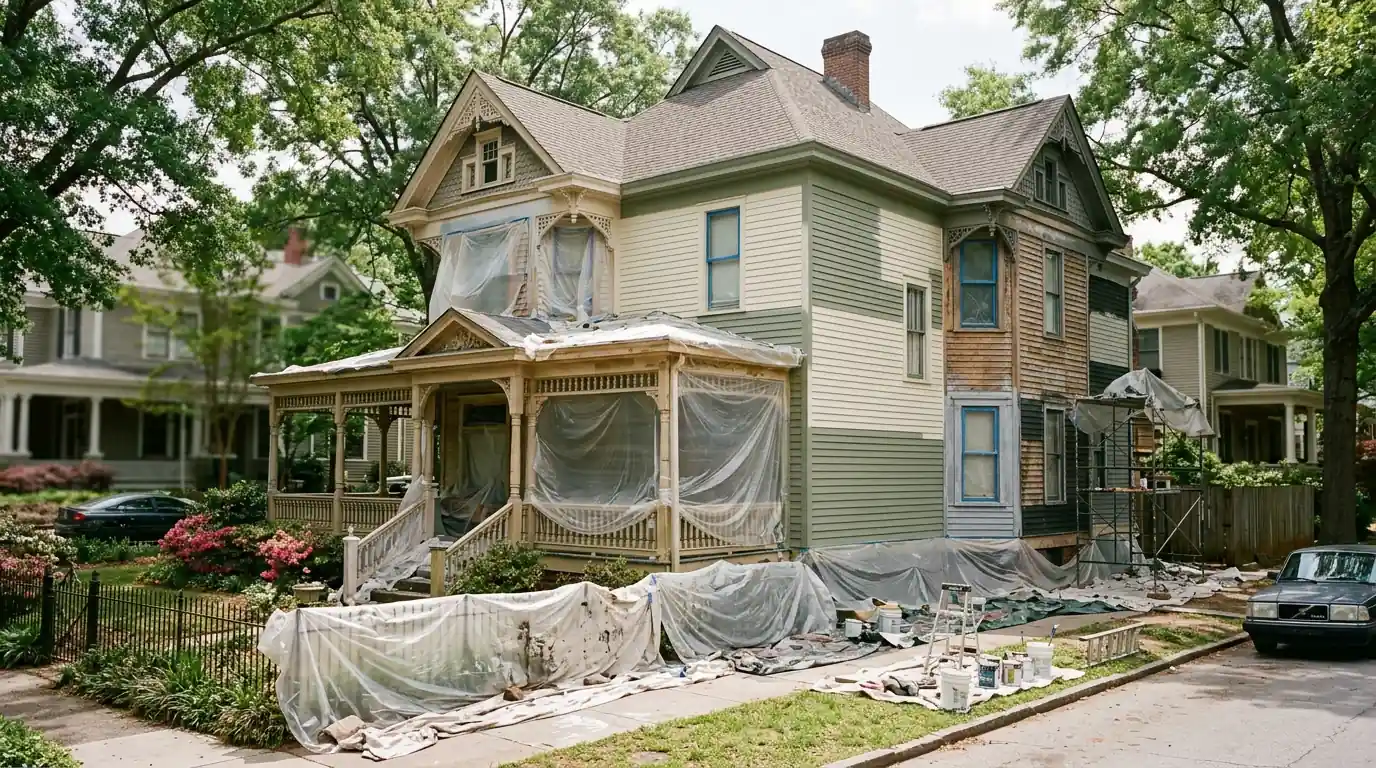
How lead-safe prep differs from ordinary prep
The goal is simple: make as little dust as possible and catch all of it.
| Step | Ordinary | Lead-safe |
|---|---|---|
| Ground and floors | Drop cloths | Plastic sheeting sealed at the edges |
| Scraping | Dry | Wet, to keep dust down |
| Sanding | Power sanders | Wet sanding or sanders with HEPA extraction |
| Paint removal | Heat guns, open flame | No open flame, no high-heat stripping |
| Cleanup | Sweeping | HEPA vacuum and wet wipe, debris bagged daily |
Atlanta's older housing
West End still has Victorian and Queen Anne homes from the 1880s and 1890s alongside 1920s Craftsman bungalows. Grant Park's houses run from the 1890s to the 1940s, Inman Park dates to Atlanta's first streetcar suburb in the late 1880s, and Kirkwood was laid out in the 1890s. In Westview, long-empty homes from the 1910s onward are being restored.
Almost all of that housing predates 1978, so lead-safe setup is the starting point on those streets, not an extra.
Plaster, old trim and paint build-up
Original plaster walls crack and loosen after a century, and many older homes carry a dozen or more coats of paint on their trim. Loose plaster is pinned back to the lath and skimmed rather than torn out. Trim profiles clogged with old paint are cleaned out carefully, and only failed layers are removed; sound old paint is cleaned, scuffed and primed over.
That slower, hand-work approach is why Angi's Atlanta data puts labor on older homes with detailed trim and plaster 20 to 40 percent higher than a standard interior.
Windows, porches and exterior wood
Old wood windows are where lead dust is most often created, because sashes rub against painted jambs every time they open. Loose glazing putty is replaced, friction points are cleaned carefully, and sills are repaired before paint. On exteriors, porches take the most weather: soft floorboards, rails and column bases are repaired before coating, and the traditional pale blue porch ceilings are repainted.
Old-growth wood in these houses is often denser than new lumber, which makes epoxy repair worth considering before replacement.
Living in the house during the work
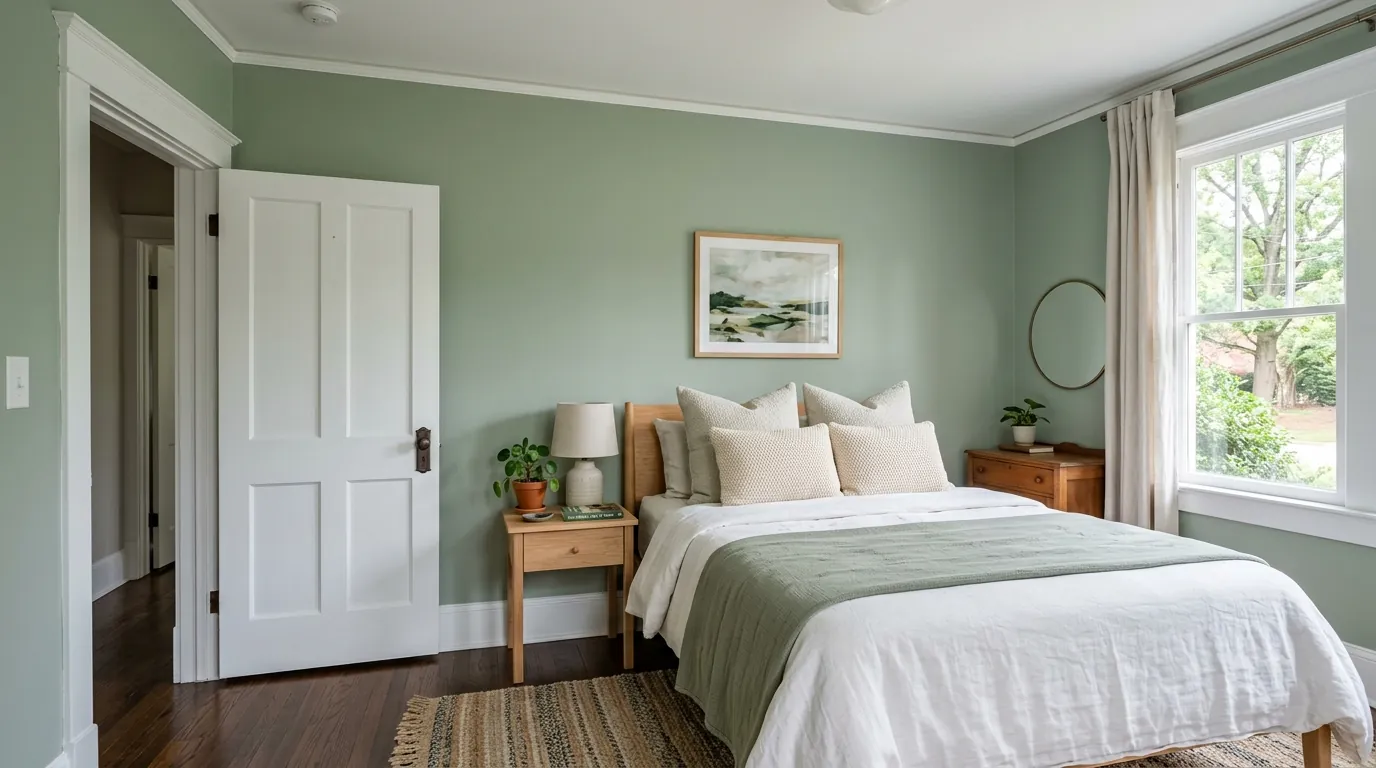
Most families stay home during a lead-safe repaint, with some planning:
- Keep children and pets out of work areas until cleanup is done
- Close windows and doors near exterior scraping
- Remove toys, furniture and planters from under exterior work areas
- Plan interior rooms in sequence so part of the house stays usable
- Expect daily cleanup rather than one big cleanup at the end
Choosing colors for an older house
Victorian and Queen Anne houses were designed for several colors: a body color, trim, window sash and one or two accents. Craftsman bungalows usually take earthier body colors with contrasting trim. Scraping a small hidden patch can show the earlier color layers, and major paint makers publish historic color collections to start from. If your home is in a designated historic district, check whether exterior color changes need approval before ordering paint.
Questions
Pre-1978 home painting questions
If it was built before 1978, assume it may until a test says otherwise.
Intact paint is low risk. Dust from scraping, sanding or burning is the hazard.
Yes. Containment, wet methods and cleanup add time to every stage.
Usually, with children and pets kept away from work areas until cleanup.
Rarely. Pinning and skimming keeps the walls and creates less dust.
Only failed layers. Sound old paint is cleaned, scuffed and primed over.
Related
Services this guide covers
- Historic Home Painting
- Loose plaster reattachment
- Rotted trim and corner board replacement
- Living room and bedroom repaint
More guides
Keep reading
Peeling Exterior Paint in Atlanta: What to Do First
What peeling paint is telling you and the order to fix it in.
fixing peeling exterior paintRestoring Original Woodwork in an Older Atlanta Home
How to tell whether stained trim needs cleaning, recoating or stripping.
refinishing old stained woodWhat Interior Painting Costs in Atlanta, GA
Room and whole-home ranges, hourly rates, and why older intown houses cost more.
interior painting costsKeep the old house, lose the peeling paint
Call and we'll walk the house, note what's original and quote the lead-safe prep.
Call (470) 887-8741Answered 24/7 from 565 Tift St SW Ste b, Atlanta.
Where we start from