Older homes guide
Restoring original woodwork in an older Atlanta home
Original stained woodwork is one of the things that makes an older house worth owning. Most of it is in better shape than it looks, and the gentlest fix that works is the right one.
Questions about your own house? We answer 24/7.
By Carla Bingham, Painting and Restoration Guides Editor · Updated September 2026
Quick answer
To restore original woodwork, start with the least invasive step: clean off grime and wax, then test whether the old finish is shellac, lacquer or varnish. Sound finishes can be revived and recoated; only failed or damaged finishes need stripping. In homes built before 1978, old finishes and any paint on the wood are tested and handled with lead-safe methods.
Clean before you judge
Decades of cooking film, hand oils and wax make stained wood look darker and duller than it is. A gentle cleaner made for finished wood, used with fine synthetic pads, often changes the picture completely.
Clean a small, out-of-the-way section first. If the wood looks good once clean, you may only need a fresh clear coat.
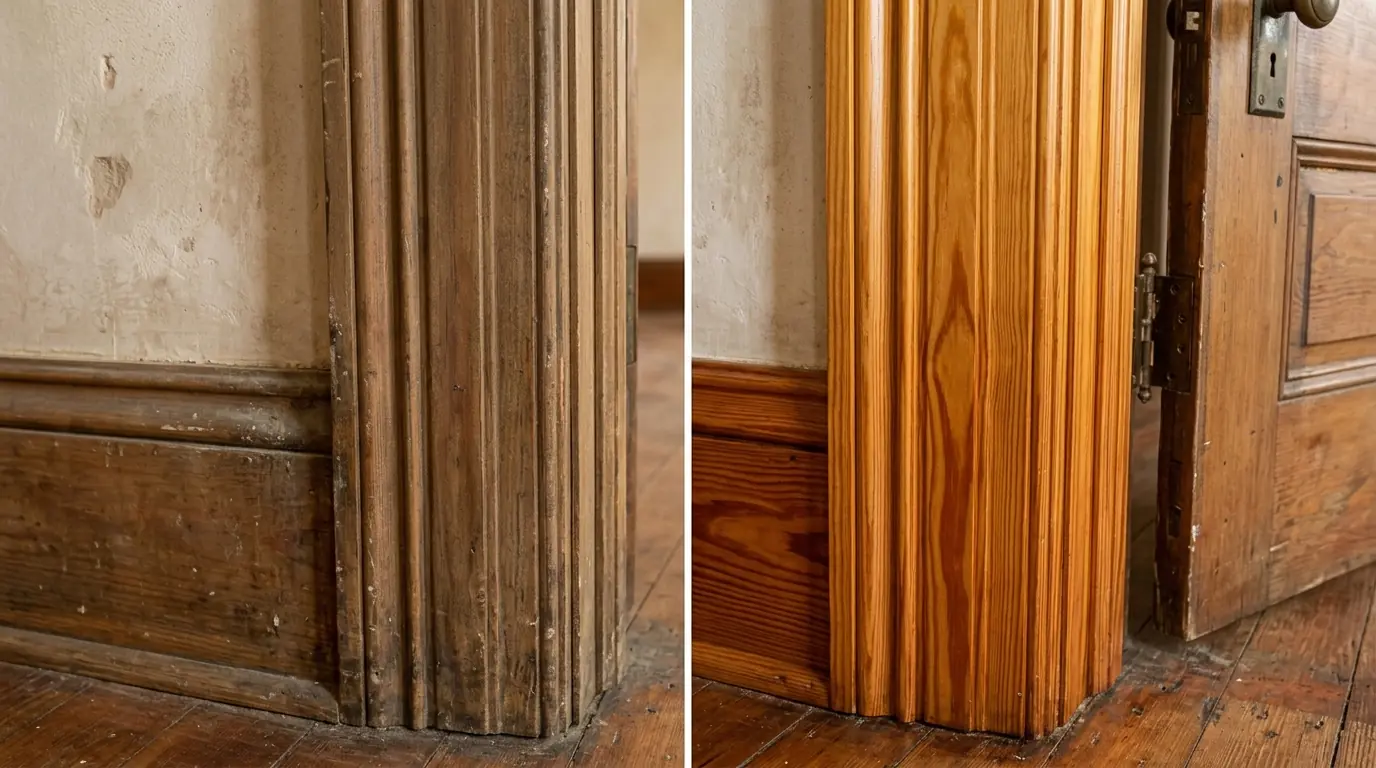
Find out what the finish is
Older homes often have shellac, lacquer or varnish, and each behaves differently. A simple test on a hidden spot tells you which: shellac softens with denatured alcohol, lacquer softens with lacquer thinner, and varnish resists both.
Knowing the finish tells you how to repair it. Shellac and lacquer can be revived and blended; varnish usually needs a scuff-sand and recoat.
Recoat, revive or strip
The right level of work depends on how far the finish has failed.
| Condition | Approach | What it keeps |
|---|---|---|
| Dirty but intact | Clean and recoat | Original color and patina |
| Worn at edges and handles | Clean, touch up stain, recoat | Most of the original finish |
| Cracked, flaking or water-stained | Strip, repair, restain and seal | The wood itself |
Repairs that make the biggest difference
Dents, gouges and gaps at miters stand out more than worn finish. Color-matched wood filler, wax fill sticks and careful stain touch-ups blend most of them in. Missing pieces of trim can be milled or matched from salvage so the profile continues unbroken.
Water stains on sills and beams can often be lightened with oxalic acid wood bleach rather than replaced.
Lead-safe care in pre-1978 homes
In houses built before 1978, old finishes and any paint that was later put on the woodwork may contain lead. Testing comes first. Sanding is done wet or with HEPA extraction, plastic goes down under the work area, and cleanup uses a HEPA vacuum and wet wiping.
Chemical stripping creates less dust than sanding, which is one reason it is often preferred for woodwork in older homes.
When painting is the better answer
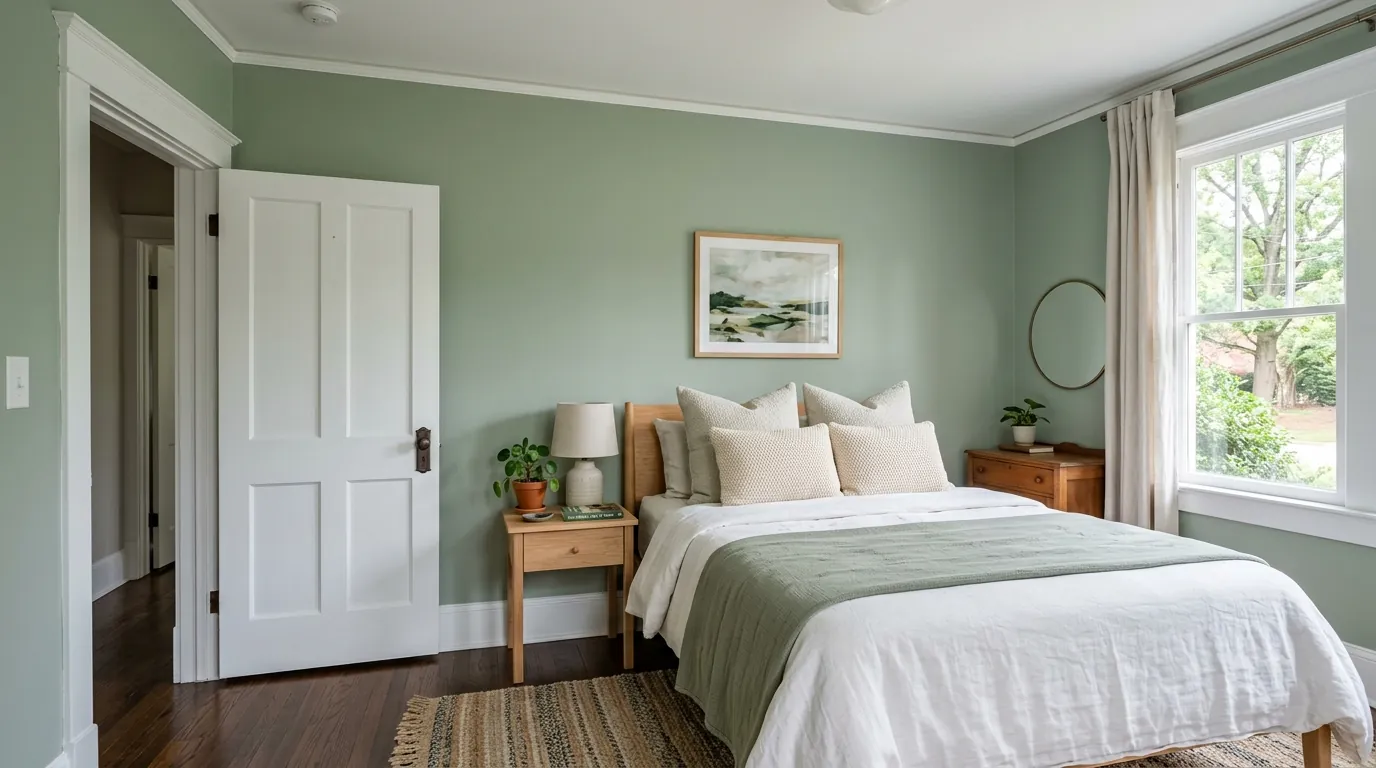
Sometimes woodwork has been patched, replaced in a different species or damaged beyond a convincing stain repair. In those cases, painting it is honest and practical. Before deciding, it is worth seeing a cleaned and recoated test section, because many owners are surprised how well old wood comes back.
Questions
Original woodwork questions
Test a hidden spot: denatured alcohol softens shellac, lacquer thinner softens lacquer.
No. Many finishes only need cleaning and a fresh clear coat.
Often, with oxalic acid wood bleach, before refinishing.
In pre-1978 homes, only after testing and with lead-safe methods.
Sometimes painting is the better answer; a test section helps decide.
Yes, by milling a matching profile or using salvage.
Related
Services this guide covers
- Interior wood door refinishing
- Pre-1978 lead-safe repainting
- Wainscoting installation
- Handrail and baluster painting
More guides
Keep reading
Painting a Pre-1978 Atlanta Home Safely
Lead-safe prep, plaster and old trim in older Atlanta houses.
our older homes guideWhat Interior Painting Costs in Atlanta, GA
Room and whole-home ranges, hourly rates, and why older intown houses cost more.
interior painting costsHow to Prep Your Home for Interior Painters
What to move, what to leave, and how to plan the days.
our prep guideKeeping original woodwork?
Call any hour; we will test a section and tell you the gentlest fix that will work.
Call (470) 887-8741Answered 24/7 from 565 Tift St SW Ste b, Atlanta.
Where we start from