Project guide
Popcorn ceiling removal: what to expect in your home
Taking down a popcorn ceiling changes a room more than almost any other interior job. It's also messier than it looks, and the finishing after the scraping is what decides the result.
Questions about your own house? We answer 24/7.
By Carla Bingham, Painting and Restoration Guides Editor · Updated September 2026
Quick answer
Popcorn ceiling removal starts with a lab test, since textures applied before the mid-1980s can contain asbestos and homes built before 1978 may have lead paint on top. After a clear result, the room is sealed in plastic, the texture is wetted and scraped, the drywall is skim coated smooth, primed and painted flat. Plan for the room to be out of use while that happens.
Step one: test before anything is disturbed
Popcorn and acoustic textures were widely used for decades, and those applied before the mid-1980s can contain asbestos. There's no way to tell by looking. A small sample goes to a lab first, and scraping only starts once the result is back.
If the house was built before 1978, the paint on top of the texture may contain lead too. A positive asbestos result turns the job into abatement by a specialist; a lead result changes how the scraping and cleanup are done.
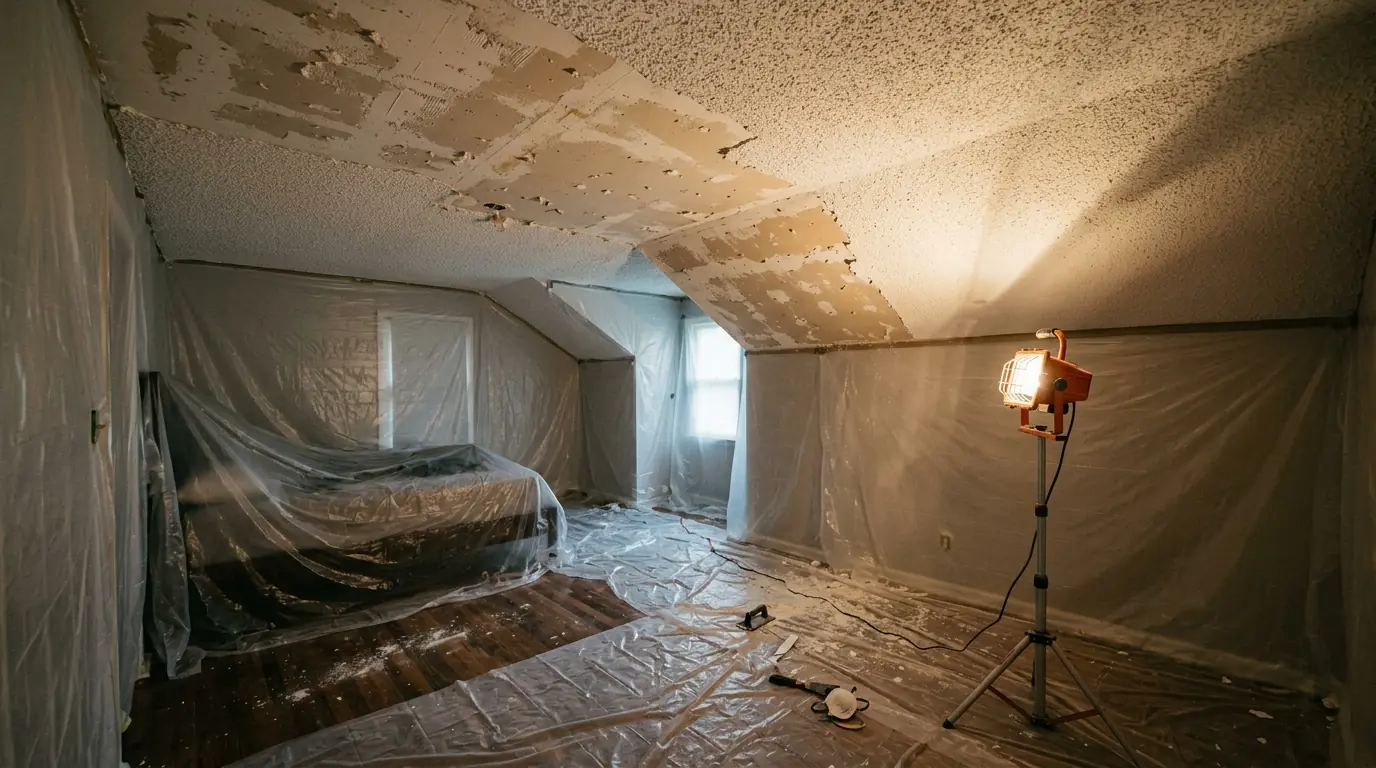
Sealing off the room
Wet popcorn gets everywhere it isn't stopped. The room is emptied or the furniture is covered and moved to the center, walls are draped in plastic from ceiling to floor, floors are sealed, doorways get zippered plastic, and HVAC vents are closed and covered so dust doesn't travel through the house.
Light fixtures and fans come down. Outlets and switches are covered because the texture is wetted during removal.
Scraping, and why painted popcorn is harder
Unpainted texture softens quickly with a light mist of water and comes off with a wide blade. Painted popcorn is harder, because the paint seals the texture and stops water soaking in. It may need scoring or a remover before it will release, and it takes longer.
Careful scraping avoids gouging the paper face of the drywall, since gouges mean more repair later.
The part most people don't expect: the skim coat
The drywall under popcorn was never finished smooth. The texture hid seams, screw heads and uneven joints, so once it's gone, the ceiling looks rough. Loose tape is redone, gouges are filled, and the whole ceiling is skim coated with joint compound, sanded, and checked with a light held low across it.
This step is what separates a smooth ceiling from one that shows every flaw once painted. It adds time, and it's worth it.
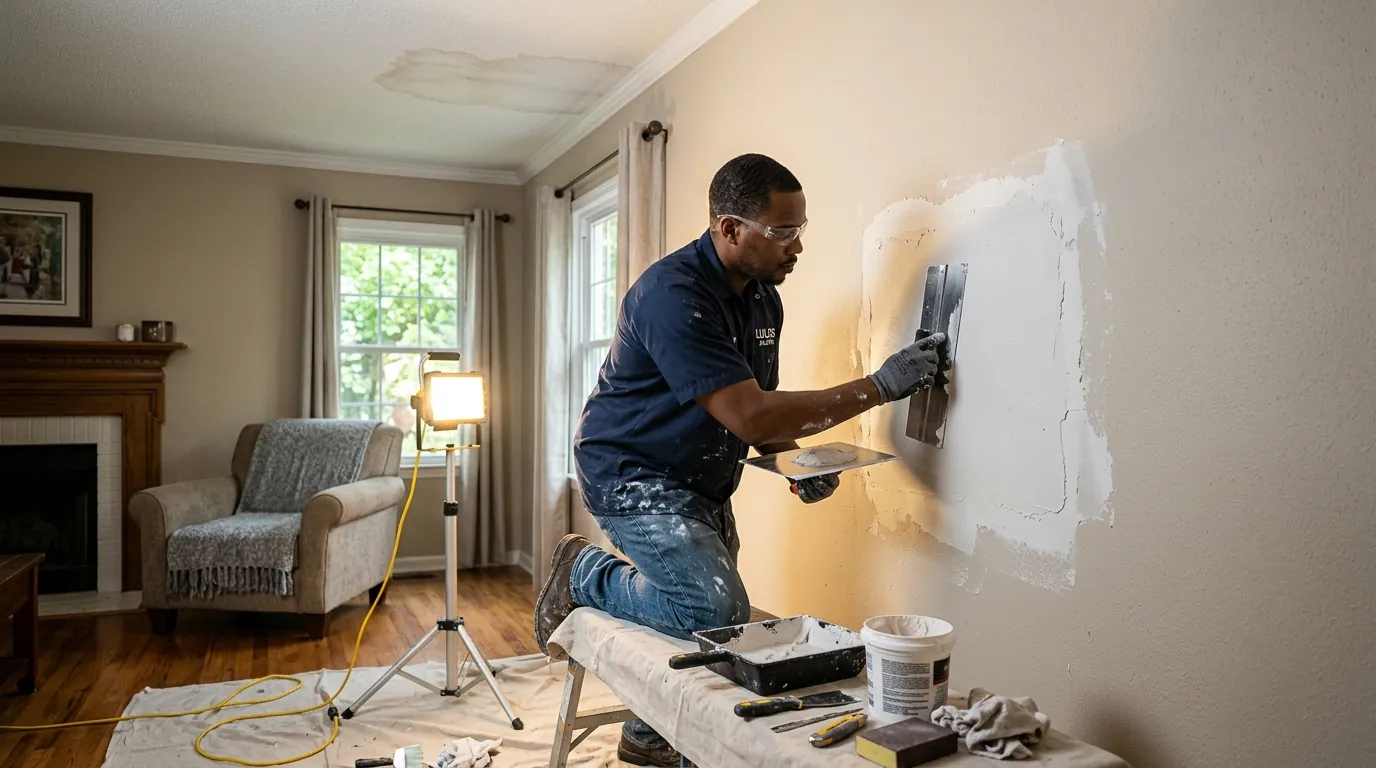
Priming and painting
Fresh skim coat is porous and soaks up paint unevenly, so it gets a drywall primer first. Then two coats of flat ceiling paint, which hides small surface variations better than any sheen. Walls are touched up where the plastic or tape pulled paint, or repainted if you're doing them anyway.
Planning your household around the work
Pick the room order with daily life in mind. Bedrooms are easier to give up for a stretch than a kitchen or the only living room, and doing several rooms back to back keeps the containment setup efficient. Pets and small children should stay out of the sealed area entirely.
Plan for the HVAC in that part of the house to be shut or its vents covered while scraping and sanding happen, and clear anything off the walls you'd rather not have handled. Once the paint is dry and the plastic comes down, the room goes straight back to normal use.
Remove, cover or leave it
Removal isn't the only option. Here's how the alternatives compare.
| Option | Result | Tradeoff |
|---|---|---|
| Remove and skim | Smooth, modern ceiling | Most mess and prep; testing required |
| Cover with new drywall | Smooth ceiling, texture left in place | Lowers the ceiling slightly; more material |
| Leave and paint | Freshened texture | Still dated; paint makes later removal harder |
Questions
Popcorn ceiling removal questions
Only a lab test can tell. Textures applied before the mid-1980s may, so test first.
Very, without containment. The room is sealed in plastic so debris stays inside it.
Yes. The work room is sealed off; you just can't use it until it's finished.
The drywall under popcorn was never finished smooth, so it shows seams and flaws once scraped.
Yes. Paint seals the texture, so it takes longer to soften and scrape.
You can, but it stays dated and makes future removal harder.
Related
Services this guide covers
More guides
Keep reading
Painting a Pre-1978 Atlanta Home Safely
Lead-safe prep, plaster and old trim in older Atlanta houses.
painting an older homeHow to Prep Your Home for Interior Painters
What to move, what to leave, and how to plan the days.
How to Prep Your Home for Interior PaintersWhat Interior Painting Costs in Atlanta, GA
Room and whole-home ranges, hourly rates, and why older intown houses cost more.
What Interior Painting Costs in Atlanta, GAReady for a smooth ceiling?
Call and we'll set up testing and quote the whole job from containment to paint.
Call (470) 887-8741Answered 24/7 from 565 Tift St SW Ste b, Atlanta.
Where we start from