Problem guide
What fire and smoke damage needs before repainting
After a fire, the urge is to paint over the damage and move on. Done in the wrong order, the stains bleed back through and the smell returns. Here is the order that works.
Questions about your own house? We answer 24/7.
By Carla Bingham, Painting and Restoration Guides Editor · Updated September 2026
Quick answer
Before repainting after a fire, the house should be released by the fire department and inspected by your insurer, damaged materials removed, soot cleaned off every affected surface, odor treated, and every smoke-exposed surface sealed with a shellac-based or smoke-sealing primer. Paint applied over soot or unsealed smoke damage peels and lets the smell come back.
First: safety and the insurance inspection
Nothing should be cleaned or painted until the fire department has released the house and your insurance adjuster has documented the damage. Cleaning first can make a claim harder, because the damage the adjuster needs to see is gone.
Take photos of every room before anything is moved, and keep receipts for any emergency work.
Remove what cannot be saved
Charred wood, blistered or soaked drywall and insulation that smells of smoke usually cannot be cleaned back to sound condition. These are cut out and replaced before any cleaning of the remaining surfaces, so you are not cleaning material that will be thrown away.
Structural framing that has charred needs an inspection and possibly a contractor or engineer before anything is covered up.
Clean the soot properly
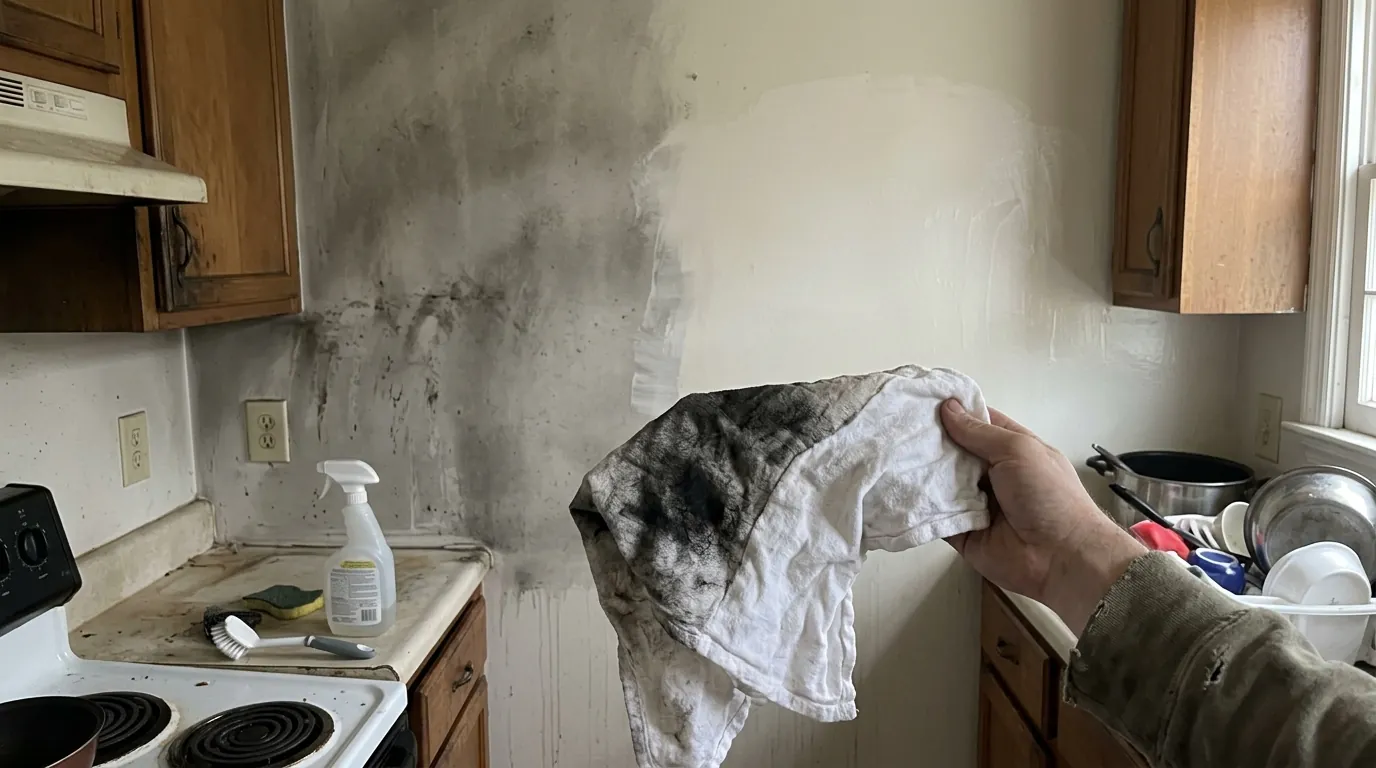
Soot is oily and spreads well beyond the fire room. It is lifted first with dry chemical sponges, so it is not smeared into surfaces, then washed with a degreasing cleaner from the top down.
A simple check helps: wipe a white cloth across a cleaned wall. If it comes back gray, the wall is not ready to seal.
Treat the odor at its source
Smoke odor sits in porous materials and in the air system. Ducts, filters and contents are often handled by a restoration company with deodorizing equipment before painting starts. Sealing walls without dealing with the source only hides part of the problem.
| Step | Usually handled by | Why it matters |
|---|---|---|
| Board-up and water removal | Restoration company | Stops further damage |
| Contents cleaning and odor treatment | Restoration company | Removes odor at its source |
| Soot cleaning of walls and trim | Painting and restoration crew | Paint will not bond to soot |
| Odor-sealing primer | Painting crew | Locks in remaining odor and stains |
| Finish painting | Painting crew | Restores the rooms |
Seal before you paint
Every smoke-exposed surface gets a shellac-based or dedicated smoke-sealing primer, including closet interiors and the backs of cabinets. Ordinary latex primer lets odor and stains pass straight through.
Rooms next to the fire room often need sealing too, even if they look clean, because smoke travels through doorways and wall cavities.
Then repaint, room by room
Only after cleaning, repairs and sealing does the finish paint go on, usually two coats wall to wall and ceiling to floor. Patching only the darkest areas leaves visible differences, because sealed and unsealed surfaces take paint differently.
A written room-by-room scope helps with your insurance claim and makes sure nothing is skipped.
Questions
Fire and smoke repainting questions
No. Let the adjuster document the damage first.
It was applied over soot that was never fully removed.
Often. Smoke travels, so nearby rooms are checked and sealed where needed.
No. Use a shellac-based or smoke-sealing primer, or the stains and odor return.
Usually a restoration company with deodorizing equipment.
Wipe it with a white cloth; any gray means it needs more cleaning.
Related
Services this guide covers
- Odor-sealing primers
- Hole and dent patching
- Nicotine and cooking-stain ceiling repaint
- Water Damage Ceiling and Wall Repair
More guides
Keep reading
A Water Stain on Your Ceiling: What It Means
What the ring is telling you and what to do before painting.
our ceiling stain guideHow to Prep Your Home for Interior Painters
What to move, what to leave, and how to plan the days.
getting ready for paintersWhat Interior Painting Costs in Atlanta, GA
Room and whole-home ranges, hourly rates, and why older intown houses cost more.
What Interior Painting Costs in Atlanta, GAReady to get the rooms back?
Call any hour after the house is released; we will start with a room-by-room walk-through.
Call (470) 887-8741Answered 24/7 from 565 Tift St SW Ste b, Atlanta.
Where we start from